Science & Fundamentals, Choosing the Right Rub
Why Does Sugar Caramelise Instead of Burn?
Aug
Why Does Sugar Caramelise Instead of Burn?
Sugar doesn’t immediately burn because it goes through a controlled chemical transformation first — caramelisation. When heated, sugar melts, breaks down and reorganises into hundreds of new flavour and colour compounds. Only once it passes its caramelisation window does it tip over into burning.
The short answer
Sugar caramelises instead of burning because its molecules break down gradually as heat rises. This breakdown creates colour, aroma and sweetness long before the temperature is high enough to scorch.
For deeper sugar behaviour, see Why Sugar in BBQ Rubs Doesn’t Burn.
What actually happens when sugar heats
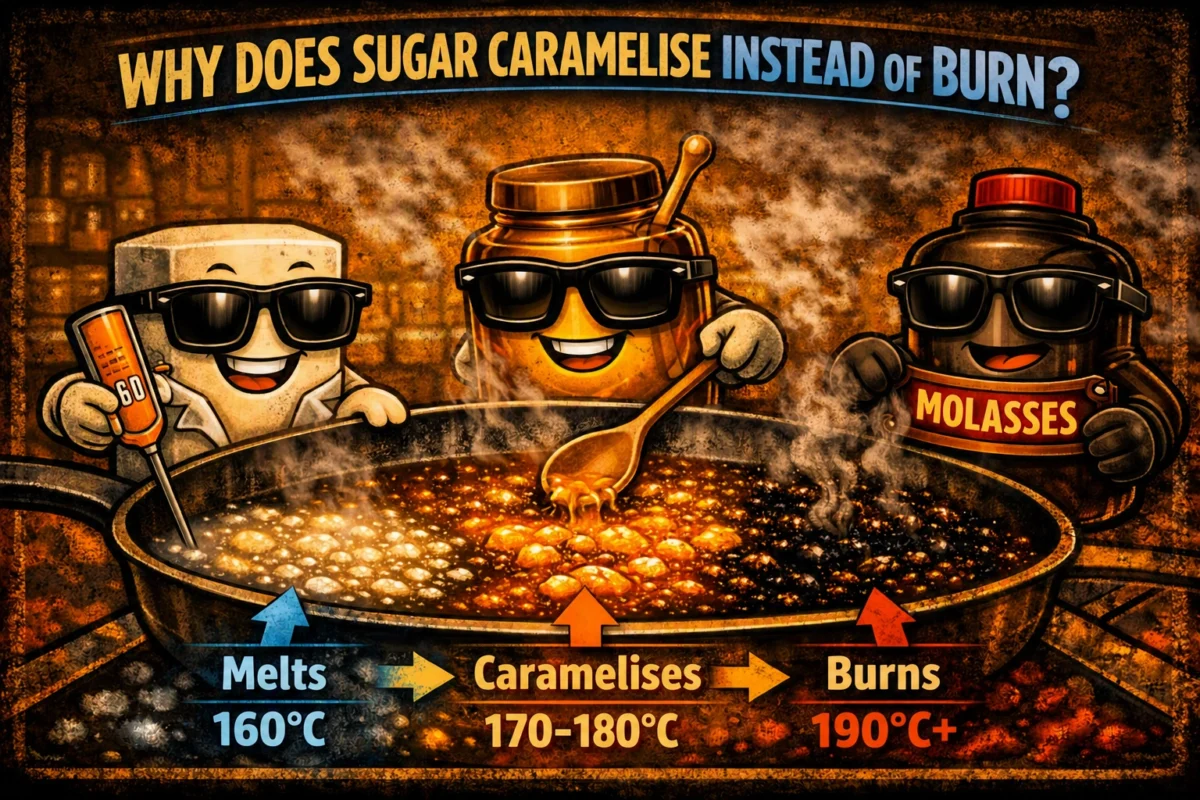
Sugar goes through three stages:
- Melting — sugar liquefies around 160°C
- Caramelisation — flavour + colour compounds form (160–180°C)
- Burning — bitter, black compounds appear (above ~185–190°C)
Why sugar caramelises first
Sugar molecules (sucrose) are stable enough that they don’t instantly burn when heated. Instead, they:
- break apart into glucose and fructose
- form new aromatic compounds
- develop golden colour
- create nutty, buttery, toffee‑like flavours
This controlled breakdown is why sugar tastes amazing on BBQ before it ever reaches burning temperature.
Why sugar doesn’t burn easily on BBQ
Sugar in rubs rarely reaches its burn point because:
- meat surface moisture keeps temperatures lower
- fat melts and cools the surface
- airflow in smokers is gentle
- caramelisation happens long before burning
Even at 120–150°C smoker temps, sugar stays safely in the caramelisation zone.
When sugar DOES burn
Sugar burns when:
- the grill is extremely hot (200°C+)
- food is cooked directly over flame
- the rub contains fine, powdery sugar
- the cook is hot‑and‑fast with high radiant heat
How to keep sugar caramelising (not burning)
1. Keep heat moderate
Sugar caramelises beautifully below 185°C. Above that, it scorches.
2. Use coarse sugar
Coarse grains melt slowly and resist burning.
3. Cook indirect
Flames burn sugar instantly — indirect heat keeps it safe.
4. Watch colour
Deep mahogany = caramelisation. Black patches = burning.
Common mistakes
- Using sugar rubs on extremely hot grills
- Cooking directly over flame
- Using fine caster sugar in rubs
- Assuming sugar burns at smoker temperatures
Bonus tips
- Use smoked paprika for colour without relying on sugar.
- Add sweetness after cooking with a finishing dust.
- Pair sugar rubs with indirect heat for best results.
- Match rub to cook style using the Protein Guide.
Final word
Sugar caramelises instead of burning because its molecules break down gradually, creating colour and flavour long before reaching burn temperature. Keep heat moderate, avoid direct flame and use coarse sugar — and you’ll get perfect caramelisation every time.