
Science & Fundamentals
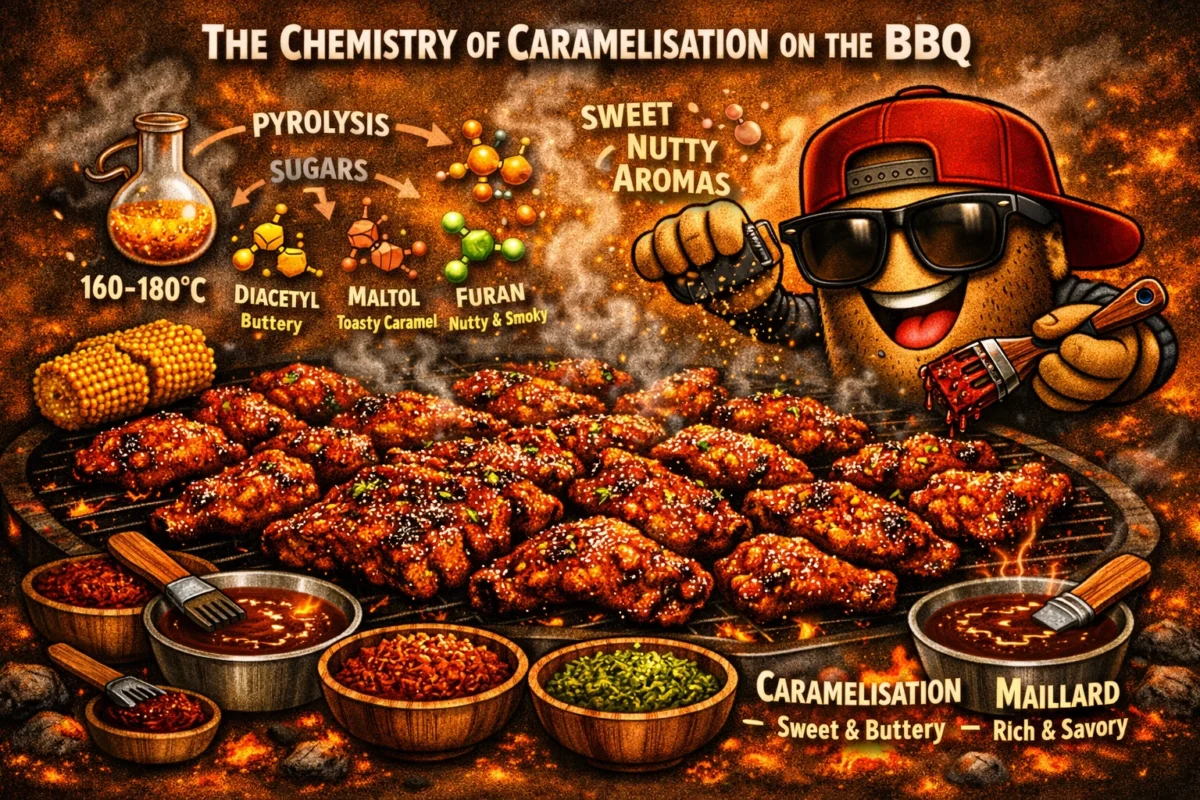
The Chemistry of Caramelisation on the BBQ
Mar
The Chemistry of Caramelisation on the BBQ (And How Your Rub Makes It Happen)
Why your meat turns golden, glossy and irresistible — and how your rub makes it happen.
Caramelisation is the moment your BBQ goes from “pretty good” to “holy hell, look at that colour”.
It’s the glossy sheen on pork belly.
The sticky edges on chicken wings.
The deep mahogany glow on ribs.
The sweet‑smoky crust that makes people hover around the grill like seagulls at the beach.
But caramelisation isn’t luck.
It’s chemistry.
And your rub — especially balanced blends like
Fixes Most Things — is the catalyst.
Let’s break down exactly what caramelisation is, how it works on the BBQ and how to make it happen every single time.
🔥 1. What Is Caramelisation?
Caramelisation is the chemical reaction that happens when sugars hit heat.
At around 160–180°C, sugars begin to:
- Break down
- Darken
- Thicken
- Sweeten
- Stick
- Gloss
This creates:
- Colour
- Shine
- Sweet‑smoky depth
- The iconic BBQ crust
It’s the flavour equivalent of turning the saturation up on your food.
🔥 2. Why Caramelisation Loves the BBQ
The BBQ is the perfect caramelisation machine because it gives you:
- Direct heat
- Dry heat
- High heat
- Smoke
- Fat rendering
- Airflow
All of these accelerate the caramelisation reaction.
This is why BBQ colour hits differently compared to oven cooking — the environment is built for it.
🔥 3. Sugars Are the Fuel
Caramelisation can’t happen without sugar.
Fixes Most Things uses:
- Brown sugar → deep, molasses‑rich caramel
- White sugar → fast colour and shine
Together, they create:
- Early colour
- Slow burn
- Balanced sweetness
- Sticky bark
It’s engineered caramelisation — and the same logic applies to blends like
Sweet Heat & Shenanigans,
which is built for deep, glossy colour.
🔥 4. Salt Supercharges Caramelisation
Salt doesn’t caramelise — but it helps caramelisation happen.
Salt:
- Pulls moisture to the surface
- Dissolves the rub
- Creates a sticky layer
- Helps sugars melt evenly
Lake Deborah salt is especially good at this because it’s clean and mineral, not harsh.
🔥 5. Heat Controls the Reaction
Caramelisation is heat‑dependent.
Below 150°C:
Sugars melt but don’t caramelise. Colour stays pale.
160–180°C:
Perfect caramelisation zone. Glossy, golden, sticky magic.
200°C+:
Caramelisation speeds up. Risk of burning increases.
This is why Australian BBQ — which runs hotter — needs balanced sugars, not sugar bombs.
Fixes Most Things is built for this exact environment.
Want to understand how rubs behave across all ingredients?
Complete Guide to Outback Smoke & Fire BBQ Rubs →
🔥 6. Fat Helps Everything
Fat is a caramelisation accelerator.
As fat renders, it:
- Mixes with sugars
- Helps them spread
- Creates shine
- Prevents burning
- Adds flavour
This is why:
- Chicken thighs
- Pork belly
- Ribs
- Salmon
…all caramelise beautifully.
🔥 7. Smoke + Caramelisation = Deep Colour
Smoke particles bond to caramelising sugars.
This creates:
- Darker colour
- Deeper flavour
- More complex bark
It’s why smoked meats look richer than grilled meats.
Fixes Most Things is engineered to interact with smoke in all the right ways — and herb‑forward blends like
Herbalicious Rubdown
and citrus‑sparked blends like
Zesty Slap
take on smoke differently but beautifully.
🔥 8. Moisture Is the Enemy
Caramelisation can’t happen until the surface dries.
Wet meat = steaming
Dry meat = browning
This is why:
- Patting meat dry
- Letting the rub sit
- Avoiding overcrowding
…are essential steps.
🔥 9. Why Some BBQ Turns Black (Not Caramelised)
Blackening happens when:
- Heat is too high
- Sugars burn
- Meat is too wet
- Rubs are unbalanced
- Fire flares up
Fixes Most Things avoids this because:
- Balanced sugars
- Clean salt
- No fillers
- No artificial sweeteners
- No heavy smoke powders
It’s built for caramelisation, not combustion.
Explore rubs engineered for perfect caramelisation →
🔥 The Final Word
Caramelisation is the heart of great BBQ.
It’s the colour.
It’s the shine.
It’s the sticky edges.
It’s the flavour that makes people go back for seconds.
And it happens when:
- Sugars melt
- Heat hits
- Moisture drops
- Smoke bonds
- Fat renders
- Rubs do their thing
Fixes Most Things is engineered for perfect caramelisation — balanced, controlled, sun‑kissed and bold.