Science & Fundamentals
Why Sugar in BBQ Rubs Doesn’t Burn (If You Know What You’re Doing)
Apr
Why Sugar in BBQ Rubs Doesn’t Burn (If You Know What You’re Doing)
The myth‑busting guide to sweet, smoky, caramelised perfection.
There’s a rumour that’s been haunting BBQ beginners for years:
“Don’t use sugar in your rub — it’ll burn.”
Wrong.
Incorrect.
Absolute nonsense.
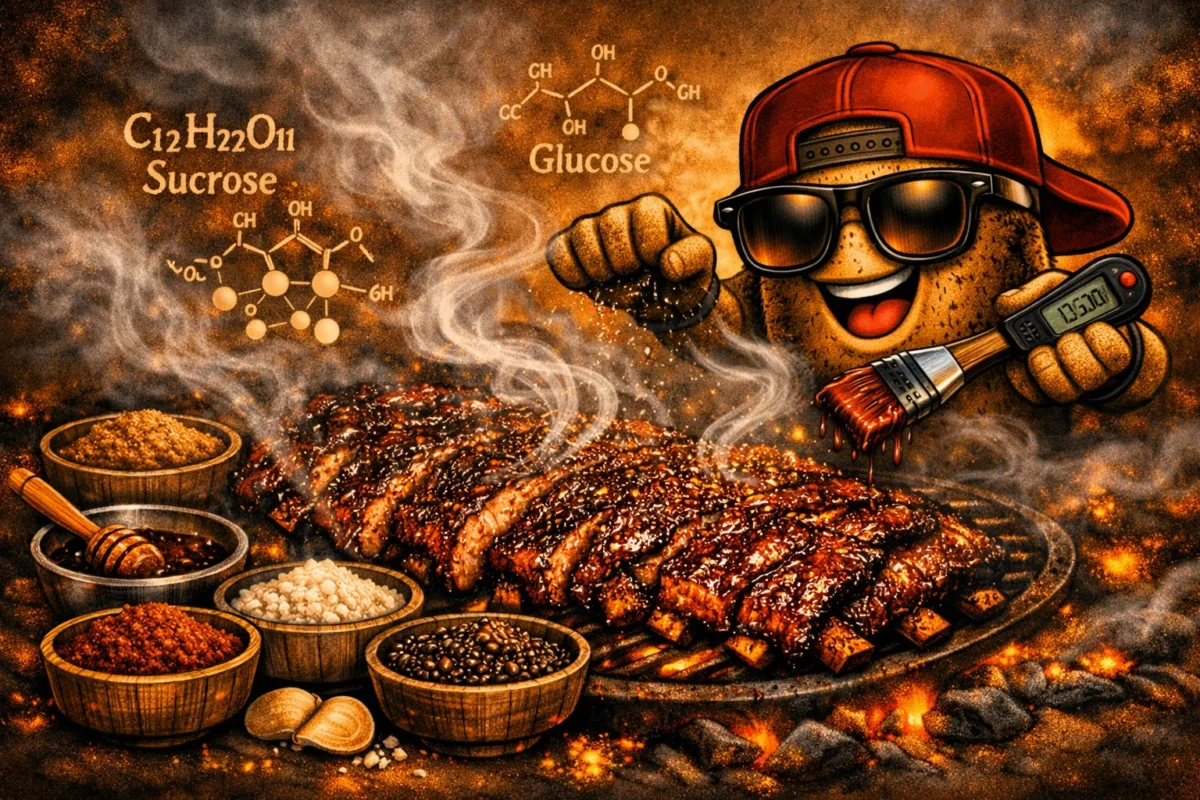
Sugar doesn’t burn the moment it touches heat.
It burns when you don’t know what you’re doing.
Let’s break down the science, the myths and why sugar is one of the most important ingredients in many Outback Smoke & Fire rubs — when it’s used with balance and intention.
🔥 First: Does Sugar Burn?
Yes — but not at the temperatures most people think.
Sugar burns at around 170°C.
But here’s the twist:
It caramelises first.
Caramelisation =
- Colour
- Stickiness
- Gloss
- Sweet‑smoky depth
- That “BBQ‑stand” aroma
Burning =
- Bitter
- Black
- Acrid
- Sadness
The goal is caramelisation, not combustion.
Learn more about caramelisation →
🔥 Why Sugar Works in BBQ Rubs
Sugar is one of the most important ingredients in a rub because it:
- Creates colour
- Builds bark
- Balances savoury and heat
- Helps the rub stick
- Adds depth without overpowering
Balanced blends like
Fixes Most Things
use brown and white sugar because they melt at different rates, giving you:
- Early colour
- Slow caramelisation
- A glossy, sticky finish
- Less risk of burning
Sweet‑leaning blends like
Sweet Heat & Shenanigans
take this even further, building deep mahogany bark without tipping into bitterness.
It’s engineered sweetness — not a sugar bomb.
Want to understand how rubs behave across all meats?
Complete Guide to Outback Smoke & Fire BBQ Rubs →
🔥 Why Sugar Doesn’t Burn on the BBQ (Most of the Time)
- Meat is wet
Moisture slows down the temperature of the surface. Wet surfaces can’t exceed 100°C until they dry out. That gives sugar time to melt, dissolve and caramelise. - Rubs dissolve before they brown
Salt pulls moisture to the surface. That moisture hydrates the rub. Hydrated sugar = slower to burn. - Bark forms a protective layer
Once the rub melts into a paste, it becomes a shield. This slows burning and speeds caramelisation. - You’re not cooking at 300°C
Even hot Australian BBQs rarely push the meat’s surface past sugar’s burn point unless you’re cooking directly over flames.
🔥 When Sugar Does Burn
Let’s be honest — it can happen.
Sugar burns when:
- You cook too hot, too fast
- You put sugary rubs directly over roaring flames
- You don’t let the rub melt before searing
- You use a rub that’s mostly sugar with no balance
Balanced blends avoid this because they’re designed for controlled caramelisation, not chaos.
🔥 Why Balanced Rubs Nail the Sweet Spot
The best rubs use sugar intentionally — not recklessly.
Blends like Fixes Most Things combine sugar with:
- Paprika for colour
- Garlic and onion for savoury depth
- Mustard for brightness
- Herbs for lift
- Cayenne for spark
- Clean mineral salt for hydration
This means:
- The sugars caramelise
- The spices brown
- The salt hydrates
- The heat stays controlled
- The bark forms evenly
It’s the difference between “sweet‑smoky perfection” and “charcoal‑flavoured sadness”.
🔥 How to Stop Sugar Burning (Even on Hot Australian BBQs)
- Don’t cook directly over flames
Flames burn. Heat caramelises. - Let the rub sit before cooking
Ten to twenty minutes lets the sugar dissolve into a paste. - Start indirect, finish direct
Build bark first. Sear later. - Keep the BBQ in the 180–200°C zone
Perfect for caramelisation. - Trust the colour, not the clock
When it’s mahogany, it’s magic.
🔥 The Final Word
Sugar isn’t the enemy.
Ignorance is.
When used properly, sugar:
- Builds bark
- Creates colour
- Adds depth
- Balances heat
- Makes your BBQ smell outrageous
Balanced rubs use sugar the smart way — controlled, intentional, caramelisation‑first.