
BBQ Basics, Science & Fundamentals
What’s the Science Behind Dry Brining?
Aug
What’s the Science Behind Dry Brining?
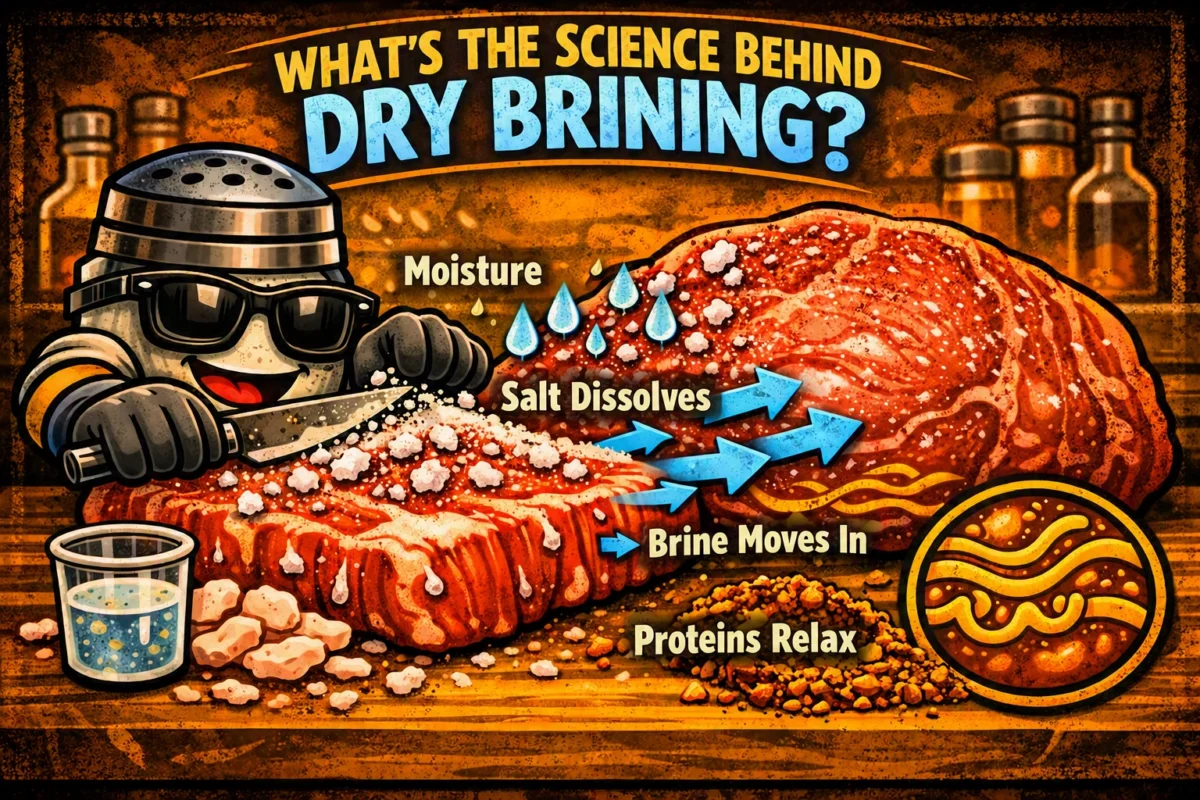
Dry brining works because salt changes the way proteins behave. When salt hits the surface of meat, it draws out moisture, dissolves into it, then pulls that salty liquid back in. Inside the meat, salt loosens protein structures so they hold more water and stay juicier during cooking. It’s simple chemistry — and incredibly effective.
The short answer
Dry brining works because salt dissolves into meat juices, travels inward, and restructures proteins so they retain moisture and amplify flavour. It’s the easiest way to make meat juicier, more tender and better seasoned.
For more on salt behaviour, see What’s the Science Behind Dry Brining? .
How dry brining actually works
1. Salt draws out moisture
Salt pulls a small amount of water from the meat’s surface. This isn’t drying — it’s the first step in dissolving the salt.
2. Salt dissolves into that moisture
The salt melts into the meat juices, creating a natural brine right on the surface.
3. The brine moves back into the meat
Osmosis pulls the salty liquid deeper into the muscle fibres. This seasons the meat from the inside out.
4. Salt restructures proteins
Salt loosens and partially unwinds protein strands. Looser proteins hold onto more water — meaning juicier meat after cooking.
5. The surface dries slightly
A dry surface browns better, builds crust faster and improves bark on BBQ.
Why dry brining improves flavour
Dry brining doesn’t just season the surface — it seasons the interior. Salt enhances natural meat flavours, balances sweetness, boosts savoury notes and helps spices bloom.
Why dry brining improves texture
Salt‑relaxed proteins lose less moisture during cooking. That means:
- juicier chicken
- more tender pork
- better bark on brisket
- more consistent results
How long dry brining takes
- Fish: 20–30 minutes
- Chicken pieces: 2–4 hours
- Whole chicken: 12–24 hours
- Pork shoulder: 12–24 hours
- Brisket: 24–48 hours
Common mistakes
- Using too much salt
- Not allowing enough time
- Dry brining wet meat
- Adding sugar on high heat (it burns)
Bonus tips
- Leave meat uncovered in the fridge for better browning.
- Use coarse salt — fine salt penetrates too fast.
- Add rub after dry brining for maximum flavour.
- Match brine time to protein size using the Protein Guide.
Final word
Dry brining works because salt transforms the meat from the inside out. It draws out moisture, dissolves, travels inward and restructures proteins so they hold onto more water. The result is juicier, more flavourful meat with better browning — all from a simple sprinkle of salt.