Troubleshooting
Why Does My Rub Burn? The Real Reason (And How to Fix It)
Jun
Why Does My Rub Burn? The Real Reason (And How to Fix It)
Outback Smoke & Fire — Flavour‑Truth for Real‑World Cooks
If you’re new to rubs, this rub application guide, our deep dive into why sugar doesn’t burn and the science of BBQ bark will help you get even more out of this breakdown.
The Short Answer
If your rub keeps burning, you’re not alone — and you’re not doing anything wrong. You’re simply bumping into a truth most beginners never get taught:
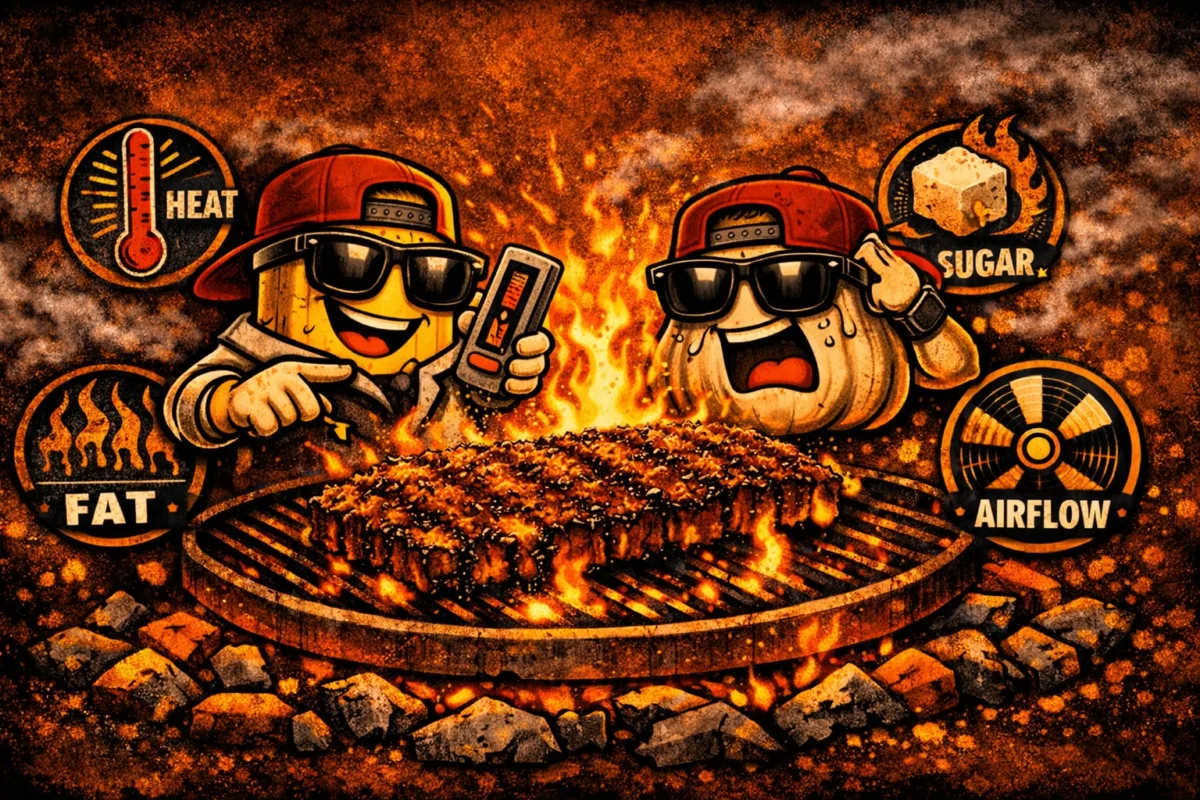
A rub burns when heat, fat, moisture, sugar, spices, binders, and airflow collide in the wrong order.
Once you understand the order, everything becomes predictable. And once it’s predictable, it becomes delicious.
What “Burning” Really Means With BBQ Rubs
You’re standing at the grill, feeling good. The meat looks promising. The rub smells incredible. Then — out of nowhere — the surface goes from golden to black.
Most people blame:
- “Too much sugar.”
- “My grill was too hot.”
- “Spices burn easily.”
Those things matter, but they’re not the whole picture.
A rub burns when:
- the surface dries too quickly
- fat drips and causes flare‑ups
- sugar hits its burn point
- spices combust
- oil accelerates browning
- the rub turns to paste, then dries and scorches
- airflow superheats the surface
It’s not one mistake. It’s a sequence.
Sugar: The #1 Reason Rubs Burn (But Not the Only One)
Sugar gives ribs their lacquer, chicken its shine and pork shoulder its bark.
But sugar has two personalities:
- Caramelisation (~160°C)
- Pyrolysis (~170–180°C)
Your grill temperature is not your surface temperature.
You might set your grill to 180°C, but:
- chicken skin can hit 260°C
- a flare‑up can spike to 700°C+
- gas grills create invisible hot spots
This is why sugar burns “even at low temps.” It’s not the grill — it’s the surface.
Heat That’s Too High (Even When It Doesn’t Feel Like It)
Rubs burn because of surface heat spikes, not the number on the dial.
Those spikes happen when you’re:
- cooking over direct heat
- too close to the top element in an oven
- leaving the lid open
- cooking on uneven grills
Direct vs Indirect Heat Mistakes
Direct heat = radiant heat + oxygen + fat vapour → burning
Indirect heat = gentle convection → browning
Use direct heat for:
- searing steak
- crisping chicken skin
- finishing bark
Use indirect heat for:
- chicken thighs
- pork ribs
- anything sugary
- anything spice‑heavy
When You Apply the Rub Matters More Than You Think
Every rub goes through a predictable lifecycle:
- Hydration
- Paste formation
- Drying
- Browning
- Pyrolysis
Apply sugary rubs:
- in the last 30–60 minutes of smoking
- in the last 5–10 minutes of grilling
- after searing
Why Some Meats Burn Faster Than Others
Chicken skin
- High fat
- Thin skin
- Burns fast
Pork shoulder
- Moist, thick, forgiving
- Sugar loves it
Steak
- Fat drips → flare‑ups
- Spices combust under direct heat
Fish
- Delicate
- Low fat
- Burns instantly
How Grill Type Affects Rub Burning
Charcoal grills
- Prone to flare‑ups
- Radiant heat spikes
Gas grills
- Uneven heat
- Weak burners → longer cook times
Pellet grills
- Gentle convection
- Sugar‑friendly
Air fryers
- High airflow
- Rapid drying
Binders, Oil, and Why They Sometimes Make It Worse
Oil
- Low smoke point
- Accelerates browning
Mustard
- Water‑based
- Evaporates cleanly
- Doesn’t burn easily
Thick binders
- Trap moisture
- Create paste → burns
Flare-Ups: The Hidden Burn Machine
Flare‑ups can push surface temps to 500–900°C in seconds.
How to Fix Flare-Ups
- Use two‑zone cooking
- Move food off the flame
- Close the lid
- Trim excess fat
How to Stop Your Rub From Burning (OSF Method)
Step 1 — Start indirect
Let the rub hydrate, paste, dry and brown safely.
Step 2 — Move to direct heat only at the end
Step 3 — Add sugar late
Step 4 — Use mustard, not oil
Step 5 — Control flare‑ups
Step 6 — Match rub chemistry to protein
Step 7 — Match rub chemistry to cooking method
Common BBQ Rub Burning Mistakes
- Using direct heat too early
- Using oil as a binder
- Applying sugary rubs at the start of a hot cook
- Cooking chicken skin directly over flame
- Not trimming excess fat
- Leaving the lid open
- Very thick rub layers
- Weak gas grills
FAQ
Why does my rub turn black?
Because sugar or spices hit pyrolysis temperatures and move past browning into burning.
Why does my rub burn in the oven?
Top‑element radiant heat, sugary marinades and oil‑heavy coatings burn quickly.
Why does my rub burn in the air fryer?
High airflow dries the surface too fast.
Why does my rub burn on chicken but not pork?
Chicken skin is thin and fatty — it heats fast. Pork shoulder is thick and forgiving.
Why does my rub burn even at low grill temps?
Hot spots and flare‑ups can superheat the surface even when the lid thermometer reads low.
The Final Word
Rubs don’t burn because you’re doing something wrong — they burn because heat, sugar, fat and airflow collide in the wrong order. Once you control the order, everything becomes predictable.
Start indirect. Add sugar late. Use mustard, not oil. Control flare‑ups. Match the rub to the protein. Match the protein to the heat source.
Do that, and your BBQ stops burning and starts caramelising — glossy, golden, barky and flavour‑true.