
BBQ Basics, Science & Fundamentals
What Makes a Rub Balanced?
Sep
What Makes a Rub Balanced?
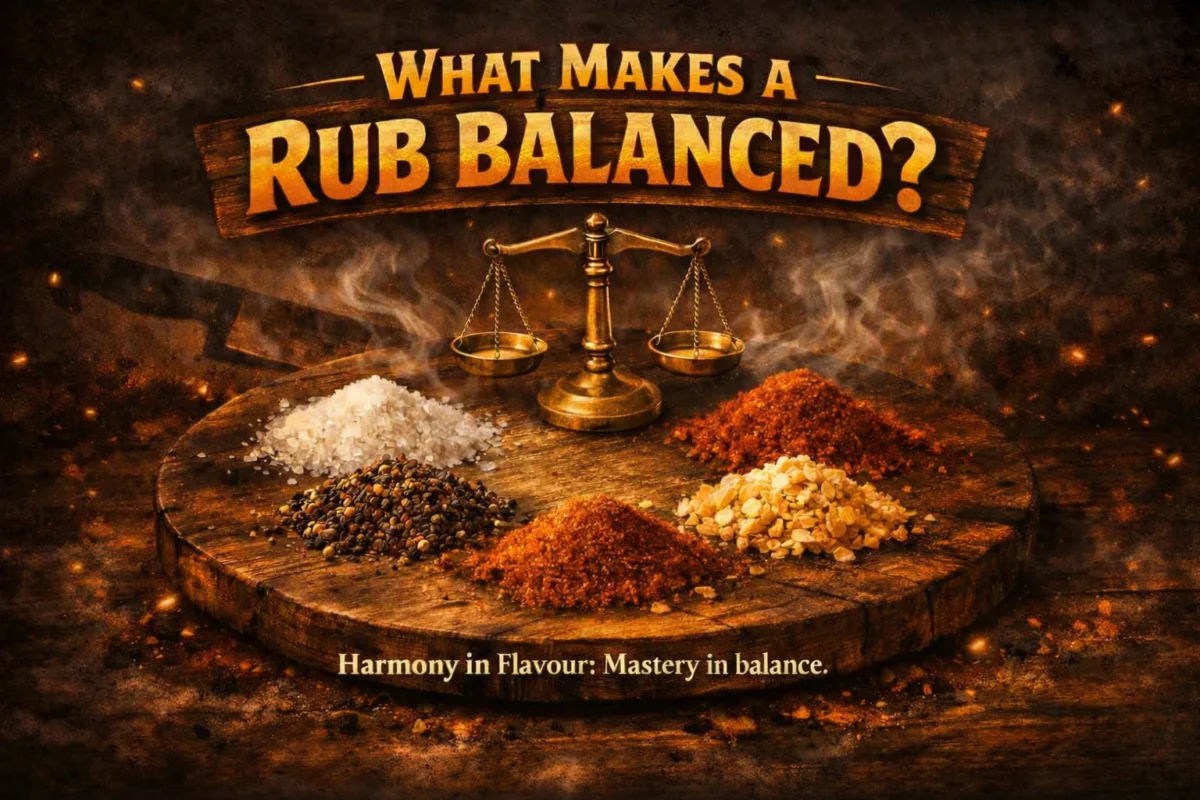
A balanced BBQ rub isn’t about having lots of ingredients — it’s about having the right ones working together. A good rub hits salt, savoury, aroma, colour and heat in a way that tastes bold without overpowering the meat.
If your rub tastes flat, muddy or “fine but not amazing”, it’s usually because one of those pillars is missing.
The short answer
A balanced rub has:
- Salt for foundation
- Savoury for depth
- Aroma for character
- Colour for visual appeal
- Heat for contrast
When these sit in harmony, the rub tastes bright, layered and clean — not salty, not sweet, not spicy, not dull. Just balanced.
For more on how rubs behave under heat, see Science & Fundamentals.
What “balanced” actually means
Balance isn’t about equal parts. It’s about proportion.
Salt carries flavour inward. Savoury ingredients build the middle. Aromatic spices create the “nose hit”. Colour spices make bark look right. Heat adds excitement.
If one category dominates, the rub feels unbalanced — too salty, too sweet, too hot, too smoky, too dull.
This is why Outback Smoke and Fire rubs are built around cut‑specific behaviour. Beef wants boldness. Chicken needs restraint. Pork loves sweetness. You can explore this in the Protein Guide.
The five pillars of a balanced rub
1. Salt (the foundation)
Salt is the only seasoning that travels inward. Without enough salt, the interior tastes flat even if the bark tastes great.
If you want deeper salt knowledge, see Salt, Heat, Smoke, Time .
2. Savoury (the body)
This is your garlic, onion, pepper, mustard and umami elements. They create the “BBQ flavour” people recognise.
Too little = bland. Too much = muddy.
3. Aroma (the character)
Paprika, smoked paprika, herbs, bush spices — these create the personality of the rub.
Smoked paprika adds depth. Regular paprika adds colour but burns easily (see Why Sugar in BBQ Rubs Doesn’t Burn for heat behaviour).
4. Colour (the bark builder)
Paprika, chilli powders and certain bush spices create colour. Colour matters because BBQ is visual — bark should look rich, not pale or grey.
If your bark looks dull, see How to Get Better Bark on BBQ .
5. Heat (the contrast)
Heat shouldn’t dominate. It should lift the flavour, not hijack it. A balanced rub uses heat as a finishing note, not the main event.
Common mistakes that ruin balance
Mistake 1: Too much salt
Salt should lead, not shout. If your rub tastes “sharp”, it’s salt imbalance.
Mistake 2: Too much sugar
Sugar is for low‑and‑slow. On high heat it burns and tastes bitter. For choosing the right rub for the cook, see Choosing the Right Rub .
Mistake 3: Too many ingredients
More ingredients do not automatically mean more flavour. Complex blends often taste muddy.
Mistake 4: Using fine spices only
Fine spices burn fast and clump. Coarse spices build bark and stay stable.
Mistake 5: Wrong rub for the cut
A balanced rub on pork may be unbalanced on chicken. A beef rub may overpower fish. For help matching rub to protein, see Protein Guide .
How to build a balanced rub (simple formula)
Use this ratio as a starting point:
- 40% salt
- 30% savoury
- 20% aroma/colour
- 10% heat
Then adjust based on the protein:
- Beef → more savoury, less colour
- Pork → more aroma + sweetness
- Chicken → lighter paprika, more garlic
- Fish → low salt, low heat, high aroma
Bonus tips
- Use smoked paprika instead of regular for better heat tolerance.
- Use coarse pepper for bark.
- Add finishing dust after cooking for extra punch.
- Store rubs properly (see Storage & Care).
- Choose rubs based on the cook style (see BBQ Basics).
Final word
A balanced rub isn’t about complexity — it’s about harmony. Salt leads. Savoury supports. Aroma lifts. Colour attracts. Heat excites. Get those right, and your BBQ will taste bold, bright and unforgettable.