Science & Fundamentals
The Science of BBQ Rubs (And Why They Work So Well)
Jun
BBQ rubs work because they trigger salt diffusion, caramelisation, Maillard browning, spice blooming and bark formation — here’s the real science behind it.
The Science of BBQ Rubs (And Why They Work So Well)
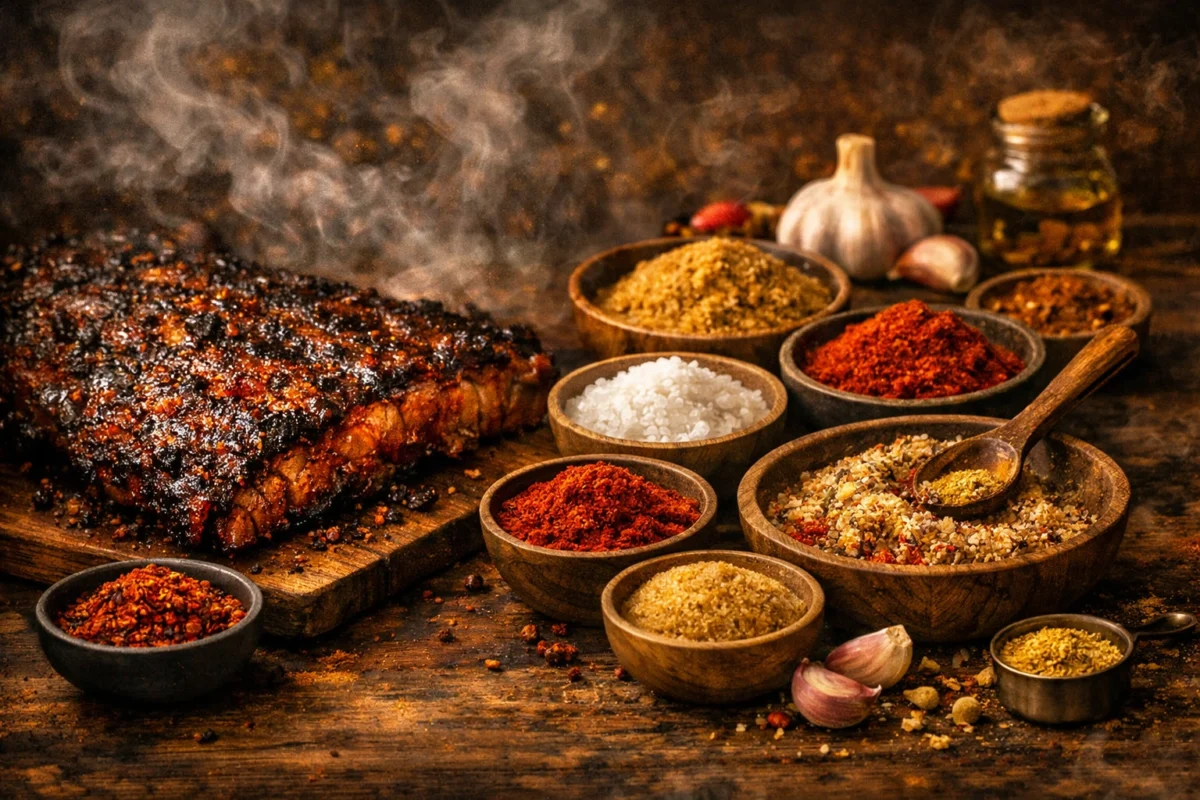
BBQ rubs aren’t magic — they just feel like it. Behind every glossy rib, barky brisket, mahogany chicken thigh and caramelised prawn is a stack of tiny chemical reactions doing the heavy lifting.
Salt is moving.
Sugars are melting.
Spices are blooming.
Proteins are browning.
Fat is rendering.
Heat is transforming everything.
What This Article Covers
- Salt diffusion
- Sugar caramelisation
- Paprika + chilli colour chemistry
- Garlic + onion umami science
- Mustard’s acidity + lift
- Herb brightness
- Fat rendering as a flavour carrier
- The Maillard reaction
- Bark formation
- Hydration + adhesion
If you’re new to rubs, this rub application guide and our deep dive into why sugar doesn’t burn will help you get even more out of this breakdown.
This is the real breakdown of how BBQ rubs work — and why the Outback Smoke & Fire range is engineered to hit every reaction at the right time.
🔥 1. Salt: The Foundation of Every Good Rub
Salt is the only ingredient in a rub that actually penetrates meat.
Here’s what it does:
- Draws out moisture → dissolves → becomes a brine
- Diffuses back in → seasons the meat internally
- Unwinds proteins → improves tenderness
- Boosts juiciness → helps meat retain water during cooking
Salt diffusion is driven by how osmosis works, which is why clean, balanced Lake Deborah salt performs so well in rubs.
Salt is the quiet achiever. Everything else in the rub depends on it.
🔥 2. Sugar: Caramelisation, Colour and Stickiness
Sugar doesn’t burn at 180°C — it caramelises. (If it’s burning, your pit is hotter than you think.)
Sugar in rubs:
- melts early
- helps the rub stick
- drives colour
- fuels caramelisation
- balances savoury flavours
- creates sticky edges
Brown sugar adds deeper flavour and colour.
White sugar adds clean sweetness and faster crust formation.
This is why Sweet Heat & Shenanigans and Fixes Most Things create that signature mahogany glow.
🔥 3. Paprika + Chilli: Colour, Warmth and Smoke
Paprika is the colour engine of BBQ rubs.
It brings:
- instant red glow
- warm, smoky depth
- early browning
- a foundation for bark
Chilli adds:
- heat
- complexity
- balance against fat
Too Hot for Common Sense uses clean, controlled chilli so you get heat without bitterness.
Shop rubs engineered for colour, bark and balance →
🔥 4. Garlic + Onion: The Savoury Backbone
These two ingredients are the umami drivers.
- deepen flavour
- round out sweetness
- add savoury punch
- support bark formation
- bloom beautifully in fat
They’re the reason Fixes Most Things works on absolutely everything.
🔥 5. Mustard: The Tangy Lift
Mustard powder is the secret weapon in many rubs.
- brightens heavy flavours
- cuts through fat
- enhances bark
- adds subtle acidity
It’s why OS&F rubs taste “alive” instead of flat.
🔥 6. Herbs: Freshness, Lift and Balance
Herbs add:
- brightness
- aroma
- complexity
- contrast against smoke
Herbalicious Rubdown is built around this principle — it lifts chicken, seafood and lighter meats without overpowering them.
🔥 7. Fat Rendering: The Flavour Highway
As fat melts, it:
- dissolves spices
- carries flavour deeper
- bastes the meat
- helps bark form
This is why pork belly burnt ends taste like BBQ candy — fat + sugar + heat = sorcery.
🔥 8. The Maillard Reaction: Browning = Flavour
The Maillard reaction is what happens when:
- amino acids (from meat)
- meet sugars (from rubs)
- at high heat
It creates:
- crust
- colour
- roasted flavours
- complexity
- that “BBQ smell”
For a deeper dive into the chemistry, see the Maillard reaction.
It’s the reason your rub matters more than your marinade.
🔥 9. Bark Formation: The Rub → Crust Transformation
Bark is not “burnt bits”. It’s a dehydrated, caramelised, seasoned crust formed by:
- salt
- sugar
- spices
- smoke
- heat
- dehydration
A good rub is engineered to:
- stick early
- melt evenly
- dry out slowly
- brown deeply
- form a cohesive crust
For more on bark, see our science of BBQ bark.
🔥 10. Hydration + Adhesion: Why Resting Matters
When you season meat and let it sit:
- salt pulls moisture out
- moisture dissolves the rub
- the rub becomes a paste
- the paste sticks
- the paste dries
- the bark forms later
This is why your rub should sit for 10–30 minutes before cooking.
🔥 The Final Word
BBQ rubs work because they trigger:
- salt diffusion
- sugar caramelisation
- Maillard browning
- spice blooming
- fat rendering
- bark formation
When a rub is balanced — sweet, smoky, savoury, salty, bright — it doesn’t just season the meat.
It transforms it.
The Outback Smoke & Fire range is engineered around these reactions so you get:
- colour
- bark
- balance
- depth
- flavour that tastes intentional
Every time.
Explore the rubs built on real BBQ science →
🔥 Frequently Asked Questions
Why does salt matter so much in BBQ rubs?
Salt penetrates meat, boosts juiciness and enhances every other flavour in the rub.
Does sugar really burn on the BBQ?
No — sugar caramelises at typical Australian BBQ temperatures. It only burns if the grill is too hot.
What creates BBQ bark?
Bark forms when salt, sugar, spices, heat and dehydration combine to create a caramelised crust.
Why should rubs rest before cooking?
Resting allows salt to draw moisture out, dissolve the rub and create a paste that sticks and forms bark later.