
BBQ Basics, Troubleshooting
Should Rubs Be Applied Before or After Trimming Fat?
Sep
Should Rubs Be Applied Before or After Trimming Meat?
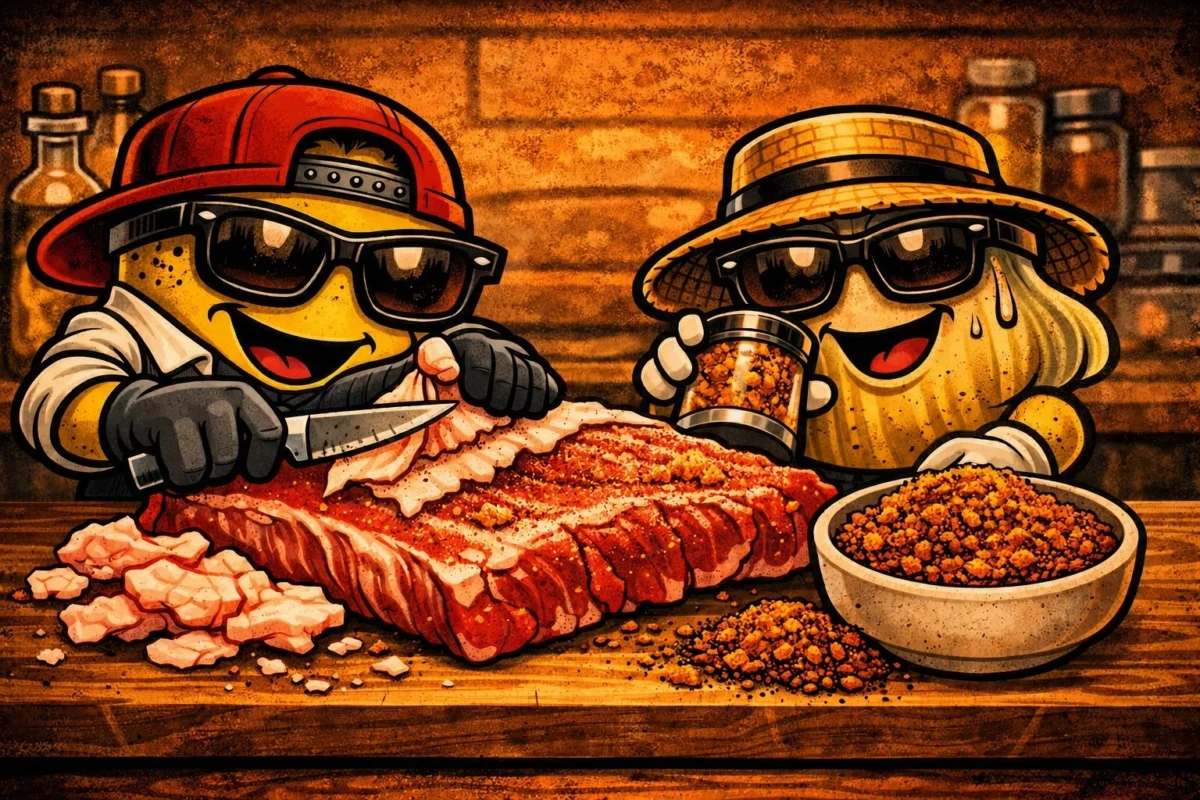
Rubs should always be applied after trimming. Trimming changes the surface of the meat — removing fat, silver skin and uneven edges — so applying rub beforehand wastes seasoning and prevents it from sticking properly.
The short answer
Trim first, then rub. Trimming exposes clean meat surfaces that allow rubs to adhere, penetrate and build better colour and bark.
Why trimming comes first
Trimming improves:
- Surface contact — rub sticks to meat, not fat
- Bark formation — exposed meat browns better
- Flavour penetration — salt and spices reach the muscle
- Even cooking — no thick fat pockets blocking heat
If you rub before trimming, you lose seasoning when you cut it away.
What trimming actually removes
- Hard fat — doesn’t melt and blocks rub
- Silver skin — prevents seasoning penetration
- Loose flaps — burn quickly and taste bitter
How trimming affects different meats
Brisket
Trim the fat cap to 6–8 mm. Rub sticks better and bark forms evenly.
Pork shoulder
Remove loose fat and skin. Rub penetrates deeper and colour develops faster.
Ribs
Remove the membrane first — rub won’t stick to it. Exposed meat absorbs seasoning properly.
Chicken
Trim excess skin and fat pockets. Rub adheres better and browns more evenly.
How to apply rub after trimming
1. Pat the meat dry
Moisture turns rub into sludge. Dry surfaces = better adhesion.
2. Sprinkle from height
Even coverage prevents clumping and builds better colour.
3. Let the rub hydrate
Give it 10–20 minutes (or overnight for dry brining). Salt melts into the meat and starts flavour penetration.
Common mistakes
- Rubbing before trimming — seasoning gets cut away
- Leaving silver skin on ribs — rub won’t stick
- Applying rub to wet meat — creates paste, not bark
- Using sugar rubs on high heat — they burn
Bonus tips
- Trim cold meat — it’s easier and cleaner.
- Use coarse rubs for better bark formation.
- Dry brine first for deeper seasoning.
- Match rub to protein using the Protein Guide.
Final word
Always trim before applying rub. Trimming exposes clean meat surfaces that allow seasoning to stick, penetrate and build proper colour. Do that, and every rub you use will work harder, taste better and create stronger bark.