
BBQ Basics, Troubleshooting
How Do I Make BBQ Rubs Stick Without Oil?
Sep
How Do I Make BBQ Rubs Stick Without Oil?
Want to make BBQ rubs stick without oil? You can. Our go‑to is a light coat of oil first, then the rub — but if you’d rather skip it, rubs will still grip. They stick because of surface moisture, tackiness and proper application.
🔥 The Short Answer
To make rubs stick without oil, dry the surface properly, use the sprinkle‑and‑pat method, give the rub a few minutes to hydrate and rely on natural tackiness from the meat. Lean cuts may need a thin binder, but most proteins don’t.
For full rub application technique, see How to Apply BBQ Rubs Properly.
🔥 Why Rubs Stick Without Oil
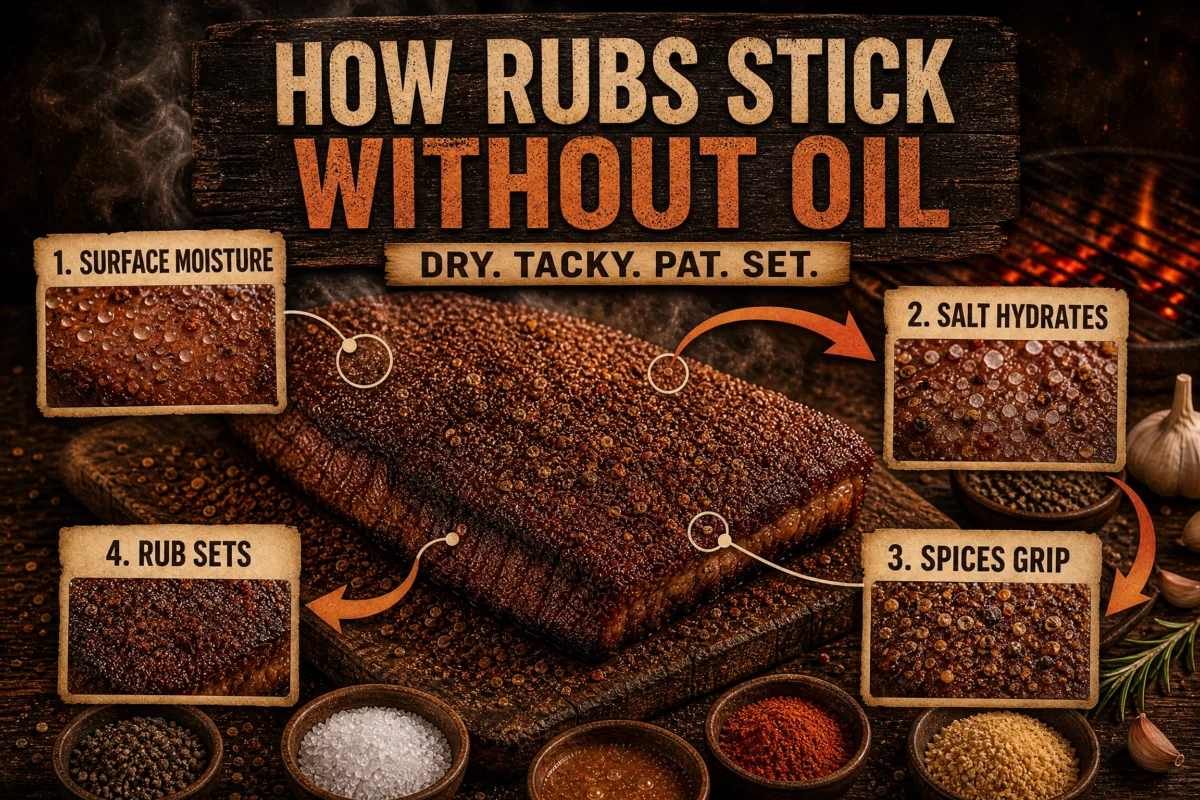
Meat naturally releases a thin layer of surface moisture. This moisture dissolves salt, hydrates spices and creates a tacky surface that grips rub well.
Oil isn’t essential because:
- salt draws moisture to the surface
- spices hydrate and bind naturally
- airflow dries the surface and sets the rub
- fat rendering helps adhesion during cooking
🔥 How to Make Rubs Stick Without Oil
1. Pat the surface dry
Wet surfaces turn rub into sludge. Pat the meat with paper towel until it’s tacky, not dripping.
2. Take the chill off
Fridge‑cold meat can be slick. Let it sit for 10–15 minutes before seasoning so the surface turns tacky.
3. Sprinkle from height
Even coverage helps spices grip instead of clumping. Use about 1 tablespoon per 500 g, or about 2 teaspoons for SPGZ and Too Hot for Common Sense. No extra salt needed.
4. Pat gently — don’t rub
Rubbing creates paste and removes seasoning. Patting presses the rub into the tacky surface.
5. Give it a few minutes
Let the rub sit for 5–10 minutes before cooking. That’s enough time for the salt to dissolve and the spices to bind. For deeper seasoning, rub meat up to 24 hours ahead and keep it covered in the fridge.
6. Use coarse spices
Coarse pepper and granulated garlic grip far better than fine powders. For rub composition guidance, see Choosing the Right Rub.
🔥 When You Do Need a Binder
Some surfaces need a little help:
- skin‑on chicken
- lean pork loin
- turkey breast
- very dry cuts
In these cases, use a thin binder — yellow mustard, a splash of water or, if you change your mind, a light coat of oil. The goal is tackiness, not moisture.
🔥 Common Mistakes
Mistake 1: Using too much binder
Heavy binder creates slickness and makes rub slide off. Use a thin coat only.
Mistake 2: Applying rub to wet meat
Wet surfaces dissolve rub and prevent bark formation.
Mistake 3: Using fine, powdery rubs only
Fine spices burn fast and clump. Coarse spices grip better and stay stable.
Mistake 4: Seasoning seafood or veg too early
Meat can take the rub up to 24 hours ahead, but seafood, veg and tofu should be seasoned just before cooking. Leave them sitting and the salt pulls out moisture, turning the rub soggy.
🔥 Bonus Tips
- Use smoked paprika for colour and heat tolerance.
- Let salt work first — it creates natural tackiness.
- Add a pinch of finishing dust after cooking for extra punch. Herbalicious Rubdown, SPGZ and Butter Me Up all work as finishers.
- For more on grip, see How to Make BBQ Rubs Stick Better.
- Store rubs properly to keep them loose (see Storage & Care).
🔥 The Final Word
Rubs don’t need oil to stick — they need dryness, tackiness and proper application. Get those right, and your rub will stay on, set beautifully and deliver bold flavour every time.