
Science & Fundamentals
The Science Behind BBQ Bark (And How Rubs Create It)
Mar
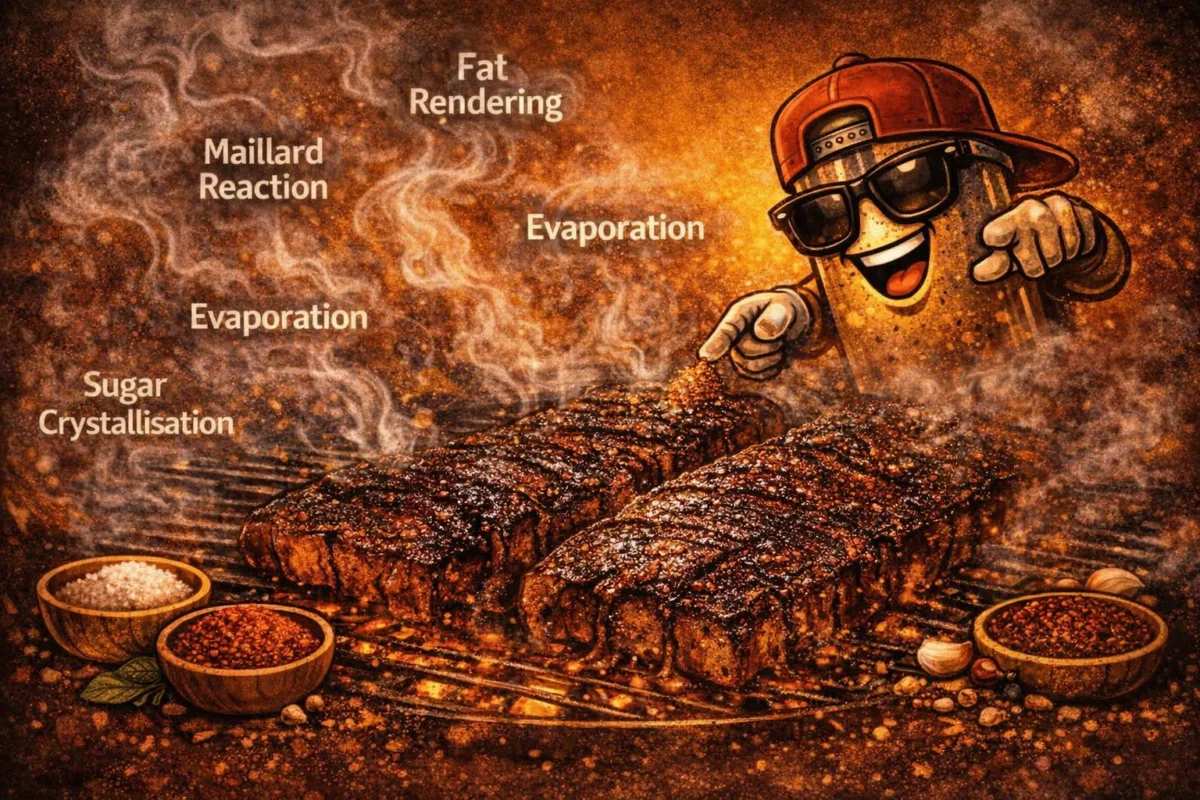
The Science Behind BBQ Bark (And How Rubs Actually Create It)
The delicious crust that makes your BBQ look like you actually know what you’re doing.
If you’ve ever seen a piece of meat come off the BBQ with that deep, mahogany, sticky‑crisp crust and thought, “How the hell do I get that?”, you’re in the right place.
That crust has a name: bark.
And no — it’s not magic, luck or pitmaster sorcery.
It’s science.
Smoky, savoury, caramelised science.
Let’s break down exactly how BBQ bark forms — and how different rubs in the Outback Smoke & Fire range help you build it.
🔥 What Is BBQ Bark, Really?
BBQ bark is the dark, flavour‑packed crust that forms on the outside of meat during cooking.
It’s made from:
- Your rub
- Heat
- Smoke
- Moisture
- Time
When these elements work together, you get that iconic:
- Sticky texture
- Deep colour
- Savoury‑sweet crunch
- Ridiculous flavour
When they don’t?
You get grey sadness.
🔥 The 3 Scientific Reactions That Create Bark
1. The Maillard Reaction
The chemical reaction between amino acids and sugars that creates browning.
It gives you:
- Colour
- Savoury depth
- Toasty, roasted flavours
Rubs rich in garlic, onion, mustard and paprika — like Fixes Most Things and Too Hot for Common Sense — accelerate this reaction beautifully.
2. Caramelisation
When sugars hit heat, they melt, darken and turn into sticky, glossy flavour bombs.
Sweet‑leaning blends like Sweet Heat & Shenanigans excel here, building deep colour and shine.
3. Dehydration
As the meat cooks, moisture evaporates from the surface. This dries the rub into a crust.
Clean mineral salt (used across the whole Outback Smoke & Fire range) helps by:
- Pulling moisture to the surface
- Dissolving the rub
- Helping it stick
- Creating a tight, flavour‑packed layer
Complete Guide to Outback Smoke & Fire BBQ Rubs →
🔥 How Rubs Create Bark (The Real Secret)
A good rub does three things:
- Sticks to the meat
Salt + sugar + spices = glue. - Melts into a paste
This paste becomes the foundation of your bark. - Hardens into a crust
Heat + time = bark.
Different rubs create different bark personalities:
- Fixes Most Things → balanced, sweet‑smoky, classic bark
- Sweet Heat & Shenanigans → deep mahogany, glossy, competition‑style bark
- Too Hot for Common Sense → spicy, dark, bold bark
- Herbalicious Rubdown → lighter, herb‑forward bark with a fresher finish
🔥 Why Australian BBQ Needs a Different Bark Strategy
American BBQ is low and slow.
Australian BBQ is “the kids are hungry, get it moving”.
So your rub needs to:
- Handle higher heat
- Caramelise fast
- Not burn
- Build bark quickly
Balanced blends like Fixes Most Things and Sweet Heat & Shenanigans are built for this hotter environment, forming bark even when the temperature climbs.
🔥 How to Get Perfect Bark Every Time
- Dry the meat properly
Moisture kills bark. - Season like you mean it
If you can still see the meat, you’re not done. - Let the rub sit
Ten to twenty minutes for small cuts, thirty or more for big ones. - Don’t fiddle
Every lid lift slows bark formation. - Use consistent heat
Fluctuations = patchy bark. - Don’t wrap too early
Wrapping traps moisture and softens bark. Let it set first.
🔥 The Final Word
Bark isn’t luck.
It’s not pitmaster magic.
It’s science — and the right rub.
Whether you want deep mahogany shine, spicy dark bark or a lighter herb‑forward crust, the rub you choose shapes the entire personality of the cook.