
Troubleshooting, BBQ Basics
How Do I Make BBQ Rubs Stick Without Oil?
Sep
How Do I Make BBQ Rubs Stick Without Oil?
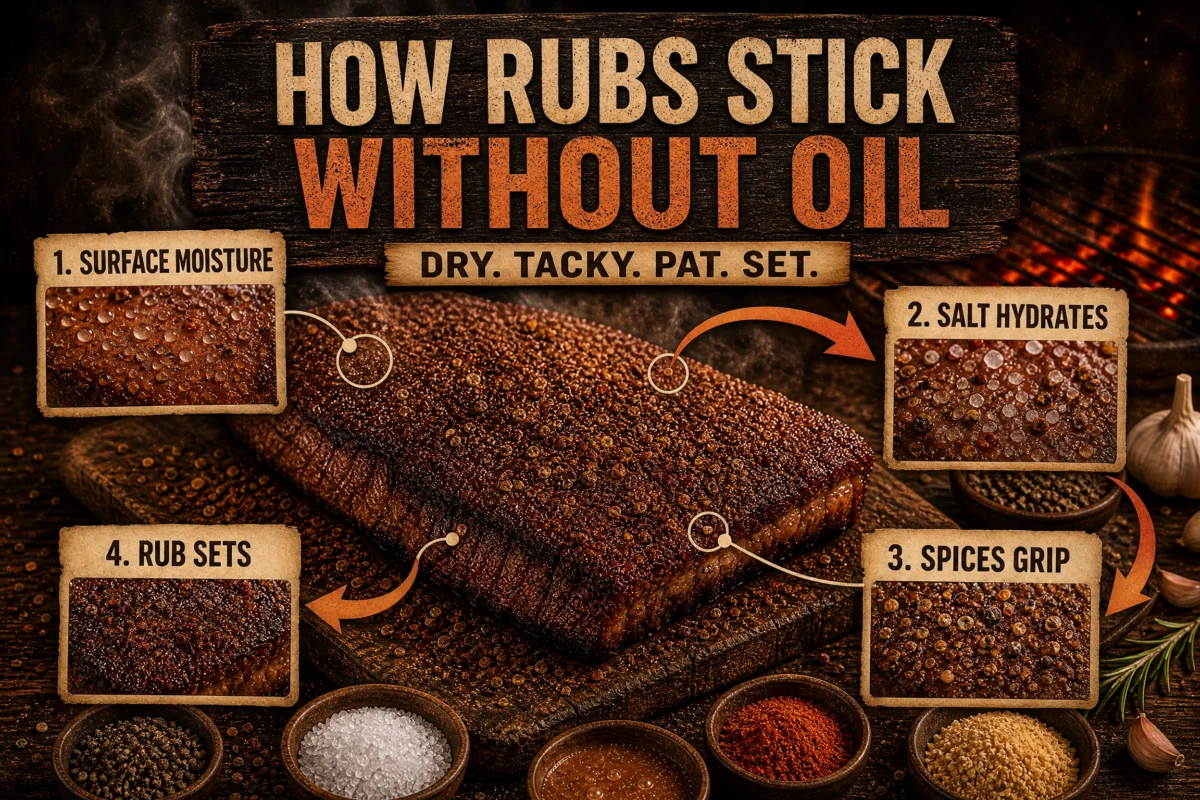
You don’t need oil to make BBQ rubs stick. In fact, oil can sometimes block smoke, soften bark and make rubs slide off. Rubs stick because of surface moisture, tackiness and proper application — not oil.
The short answer
To make rubs stick without oil, dry the surface properly, use the sprinkle‑and‑pat method, let the rub hydrate for 5–10 minutes and rely on natural tackiness from the meat. Lean cuts may need a binder, but most proteins don’t.
For full rub application technique, see How to Apply BBQ Rubs Properly.
Why rubs stick without oil
Meat naturally releases a thin layer of surface moisture as it warms. This moisture dissolves salt, hydrates spices and creates a tacky surface that grips rub perfectly.
Oil isn’t necessary because:
- salt draws moisture to the surface
- spices hydrate and bind naturally
- airflow dries the surface and sets the rub
- fat rendering helps adhesion during cooking
How to make rubs stick without oil
1. Pat the surface dry
Wet surfaces turn rub into sludge. Dry the meat until it’s tacky, not dripping.
2. Warm the meat slightly
Cold meat is slick and rejects rub. Let it warm for 10–15 minutes so natural moisture rises.
3. Sprinkle from height
Even coverage helps spices grip instead of clumping. For technique, see How to Apply BBQ Rubs Properly.
4. Pat gently — don’t rub
Rubbing creates paste and removes seasoning. Patting presses the rub into the tacky surface.
5. Let the rub hydrate for 5–10 minutes
This is the secret. Hydration time lets salt dissolve and spices bind naturally.
6. Use coarse spices
Coarse pepper, coarse salt and granulated garlic grip far better than fine powders. For rub composition guidance, see Choosing the Right Rub.
When you do need a binder
Some surfaces need a little help:
- skin‑on chicken
- lean pork loin
- turkey breast
- very dry cuts
In these cases, use a thin binder — mustard, Worcestershire or even water. The goal is tackiness, not moisture.
Common mistakes
Mistake 1: Using too much binder
Heavy binder creates slickness and makes rub slide off. Use a thin coat only.
Mistake 2: Applying rub to wet meat
Wet surfaces dissolve rub and prevent bark formation.
Mistake 3: Using fine, powdery rubs only
Fine spices burn fast and clump. Coarse spices grip better and stay stable.
Mistake 4: Cooking immediately after seasoning
Rub needs hydration time. Cooking too soon prevents adhesion and dulls flavour.
Bonus tips
- Use smoked paprika for colour and heat tolerance.
- Let salt work first — it creates natural tackiness.
- Use finishing dust after cooking for extra punch.
- Store rubs properly to keep them loose (see Storage & Care).
Final word
Rubs don’t need oil to stick — they need dryness, tackiness and proper application. Get those right, and your rub will stay on, set beautifully and deliver bold flavour every time.