
Troubleshooting
Why Does My Chicken Skin Go Rubbery? The Real Reason (And How to Fix It)
Jun
Why Does My Chicken Skin Go Rubbery? The Real Reason (And How to Fix It)
Outback Smoke & Fire — Flavour‑Truth for Real‑World Cooks
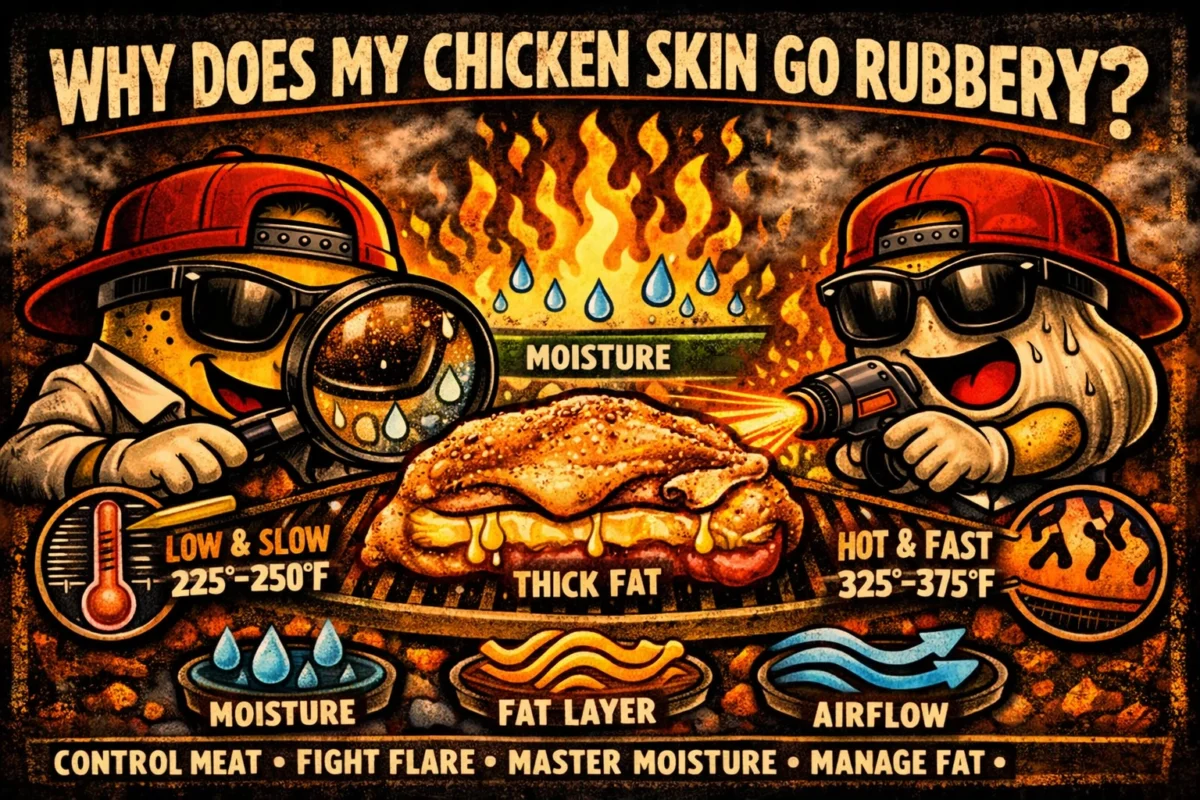
Rubbery chicken skin isn’t a mystery — it’s a sequence problem. When moisture stays trapped, fat doesn’t fully render and the surface never gets hot enough to tighten, the skin turns soft, stretchy and disappointing. Fix the sequence and the skin transforms.
If you’re new to OSF, these guides will help you get even better results:
1. Why Chicken Skin Turns Rubbery
Chicken skin is a thin layer of fat, collagen and water. To get good skin, three things must happen:
- Moisture must evaporate
- Fat must render
- Skin must tighten
If any step fails, the skin becomes rubbery. Most cooks fail all three without realising it.
2. The Three Things That Must Happen for Good Skin
1. The Skin Must Start Dry
Wet skin steams instead of crisping. Moisture comes from:
- wet brines
- marinades
- spritzing
- water pans
- crowded grates
- cooking straight from the packet
Dry skin = crisp skin. Wet skin = rubber.
2. The Fat Must Render
The thick fat layer under the skin needs enough heat to melt. Low temperatures cook the meat before the fat has time to render, leaving the skin thick and chewy.
3. The Surface Must Tighten
Chicken skin needs 275–325°F (135–160°C) to tighten. Anything below that — especially 225–250°F — guarantees rubbery skin.
3. What Stops Skin From Crisping
Too Much Moisture
Moisture is the #1 enemy of crisp skin. Wet brines, heavy sauces, spritzing and water pans all keep the skin steaming instead of drying.
Low Heat
Low‑and‑slow temperatures are perfect for brisket and pork shoulder, but terrible for chicken skin. The fat doesn’t render and the skin never tightens.
Humidity and Poor Airflow
Humidity slows evaporation. Poor airflow traps steam. Crowded grates, foil pans and closed vents all contribute to rubbery skin.
Searing Too Early
Searing at the start tightens the skin before the fat melts, trapping a thick layer of unrendered fat underneath.
Saucing Too Early
Sauce is mostly water and sugar. Applied early, it forms a wet blanket that prevents crisping.
4. Why Low‑and‑Slow Doesn’t Work for Chicken
Smoking temperatures (225–250°F) are ideal for smoke flavour but terrible for skin texture. At these temps:
- the meat cooks
- the fat doesn’t render
- the skin steams in a humid chamber
If your smoker can’t reach 300°F or higher, you’ll need a separate high‑heat finish.
5. The Step‑By‑Step Method That Always Works
Step 1 — Dry the Skin
- Pat dry thoroughly
- Salt the skin
- Rest uncovered in the fridge for 1–24 hours
Step 2 — Start Indirect at 225–275°F (107–135°C)
This gently renders the fat and builds smoke flavour.
Step 3 — Finish Hot at 300–375°F (150–190°C)
This tightens the skin after the fat has rendered. Move to a hotter zone or increase the temperature.
Step 4 — Sauce Only at the End
Apply a thin layer in the last 5–10 minutes so it sets without softening the skin.
Step 5 — Give the Chicken Space
Airflow is everything. Don’t crowd the grates.
Step 6 — Rest Before Carving
Rest for 10 minutes to keep the meat juicy and prevent the skin from softening.
6. Fast Fixes for Rubbery Skin
Finish on a Hot Grill
2–4 minutes per side over direct heat.
Blast in a Hot Oven
425–450°F (220–230°C) on a wire rack.
Pat Dry + Thin Oil Layer
Blot the skin, brush lightly with oil, finish hot.
Use a Broiler or Torch
Quick, effective and dramatic.
Air Fryer Finish
200°C for 5–10 minutes.
7. How to Adjust for Wings, Thighs, Breasts and Whole Birds
Wings
High heat all the way — 325–375°F. They love it.
Thighs & Drumsticks
Start low, finish hot. Trim loose skin.
Bone‑In Breasts
Moderate heat → short high‑heat finish. Avoid overcooking.
Whole Chickens
Spatchcock for airflow. Cook evenly. Finish hot.
8. Common Mistakes to Avoid
- Wet brining without drying the skin
- Wrapping in foil
- Using water pans for chicken
- Crowding the grates
- Searing first instead of last
- Saucing too early
9. Your Chicken Skin Questions, Answered
Why is my chicken skin rubbery even at 250°F?
Because 250°F isn’t hot enough to render fat.
Can I get good skin in a pellet smoker?
Yes — but only if you finish hot.
Is rubbery chicken skin safe to eat?
Yes. It’s a texture issue, not a safety issue.
Why does the skin pull off in one piece?
The fat underneath didn’t render.
Does baking powder help?
It helps dry the surface — but heat does the real work.
Bringing It All Together
Rubbery chicken skin isn’t a flaw in your smoker or your rub — it’s a sequence issue. Dry the skin. Render the fat. Finish hot. Sauce late. Give it airflow. Once you understand the order, chicken skin becomes predictable, crisp and outrageously good.