
BBQ Basics
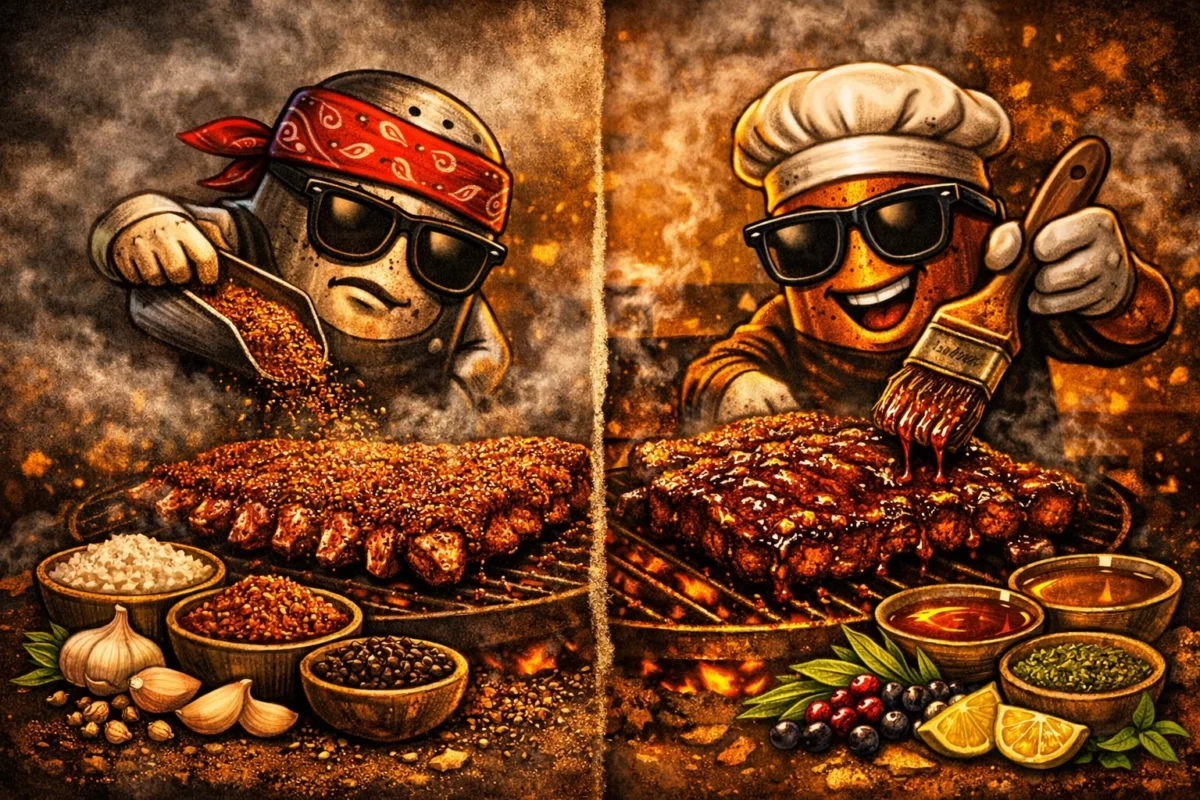
Dry Rub vs Wet Rub: When to Use Each
Sep
Dry Rub vs Wet Rub: When to Use Each
The no‑nonsense guide to choosing the right flavour weapon for your BBQ.
If you’ve ever stood at the BBQ wondering whether to slap your meat with a dry rub, a wet rub, a marinade or just blind hope… you’re not alone.
This is one of the most common BBQ questions on the internet — and one of the most misunderstood.
So let’s break it down properly, Australian‑style.
No fluff. No jargon. No “pitmaster secrets”.
Just clear answers, bold flavour and a little Outback swagger.
🔥 First: What’s the Actual Difference?
Dry Rub
A blend of spices, herbs, salt, sugar and heat.
Think: Fixes Most Things, Sweet Heat & Shenanigans, Too Hot for Common Sense.
Dry rubs give you:
- Bark
- Colour
- Caramelisation
- Texture
- Bold flavour
Wet Rub
A dry rub mixed with a liquid — usually oil, mustard, vinegar or yoghurt.
Wet rubs give you:
- Deeper penetration
- Softer crust
- More moisture
- A paste‑like coating
Both have their place.
Both can be delicious.
Both can go horribly wrong if you don’t know what you’re doing.
🔥 When to Use a Dry Rub
Dry rubs are your go‑to when you want:
- Bark
Dry rubs create that iconic crust — the mahogany, sticky, smoky outer layer that makes your BBQ look like a magazine cover. - Colour
Smoked paprika + sugar = instant glow. - Texture
Dry rubs give you crunch, crispness and caramelisation. - High‑heat performance
Perfect for Australian BBQs where the grill is hotter than the sun. - Versatility
Chicken, pork, seafood, veg — dry rubs do it all.
Great dry‑rub performers in the range:
- Fixes Most Things — balanced, bold, all‑rounder bark builder
- Sweet Heat & Shenanigans — sticky, glossy, caramelising
- Too Hot for Common Sense — clean heat with crisp edges
Perfect for:
- Chicken wings
- Pork ribs
- Pork belly
- Whole chooks
- Veggies
- Seafood
Want a deeper breakdown of rub types and how they behave?
Complete Guide to Outback Smoke & Fire BBQ Rubs →
🔥 When to Use a Wet Rub
Wet rubs shine when you want:
- Deeper flavour penetration
Liquids help spices seep into the meat. - Softer crust
Wet rubs don’t form bark — they form a flavour paste. - Extra moisture
Great for lean cuts. - Gentle heat
Wet rubs protect spices from burning. - Sticky, glossy finishes
Especially good for skewers and quick cooks.
Great wet‑rub performers in the range:
- Herbalicious Rubdown — bright, fresh, perfect with yoghurt or oil
- Sweet Heat & Shenanigans — turns into a sticky paste instantly
- Fixes Most Things — mustard‑based wet rubs love it
Perfect for:
- Chicken breasts
- Pork chops
- Lamb cutlets
- Skewers
- Weeknight cooks
To make a wet rub:
- Add a splash of oil
- Or a smear of mustard
- Or a spoon of yoghurt (for chicken)
Instant flavour paste.
Zero effort.
🔥 Dry Rub vs Wet Rub: Which One Is Better?
Short answer:
Neither. They’re tools — not teams.
Long answer:
Use the one that matches your cooking style, your cut of meat and your desired finish.
If you want bark → Dry rub
If you want deep flavour → Wet rub
If you want colour → Dry rub
If you want moisture → Wet rub
If you want versatility → Dry rub
If you want a quick flavour hit → Wet rub
The Outback Smoke & Fire range is built to shine in both formats — each rub just brings its own personality.
🔥 The Hybrid Method (The Secret Weapon)
Want the best of both worlds?
Do this:
- Apply your chosen Outback Smoke & Fire rub as a dry rub
- Let it sit 10–20 minutes
- Add a light brush of oil or mustard right before cooking
This gives you:
- Bark
- Colour
- Moisture
- Stickiness
- Depth
Best hybrid performers: Fixes Most Things, Sweet Heat & Shenanigans.
🔥 The Final Word
Dry rubs and wet rubs aren’t rivals — they’re flavour tools.
Use the right one at the right time and your BBQ goes from “pretty good” to “holy hell, who cooked this?”
The Outback Smoke & Fire range is built to shine as:
- Dry rubs
- Wet rubs
- Hybrid rubs
- Finishing seasonings
Pick the method that matches your cook — the flavour will follow.