BBQ Basics, Troubleshooting
How Do I Stop Flare-Ups When Grilling?
Nov
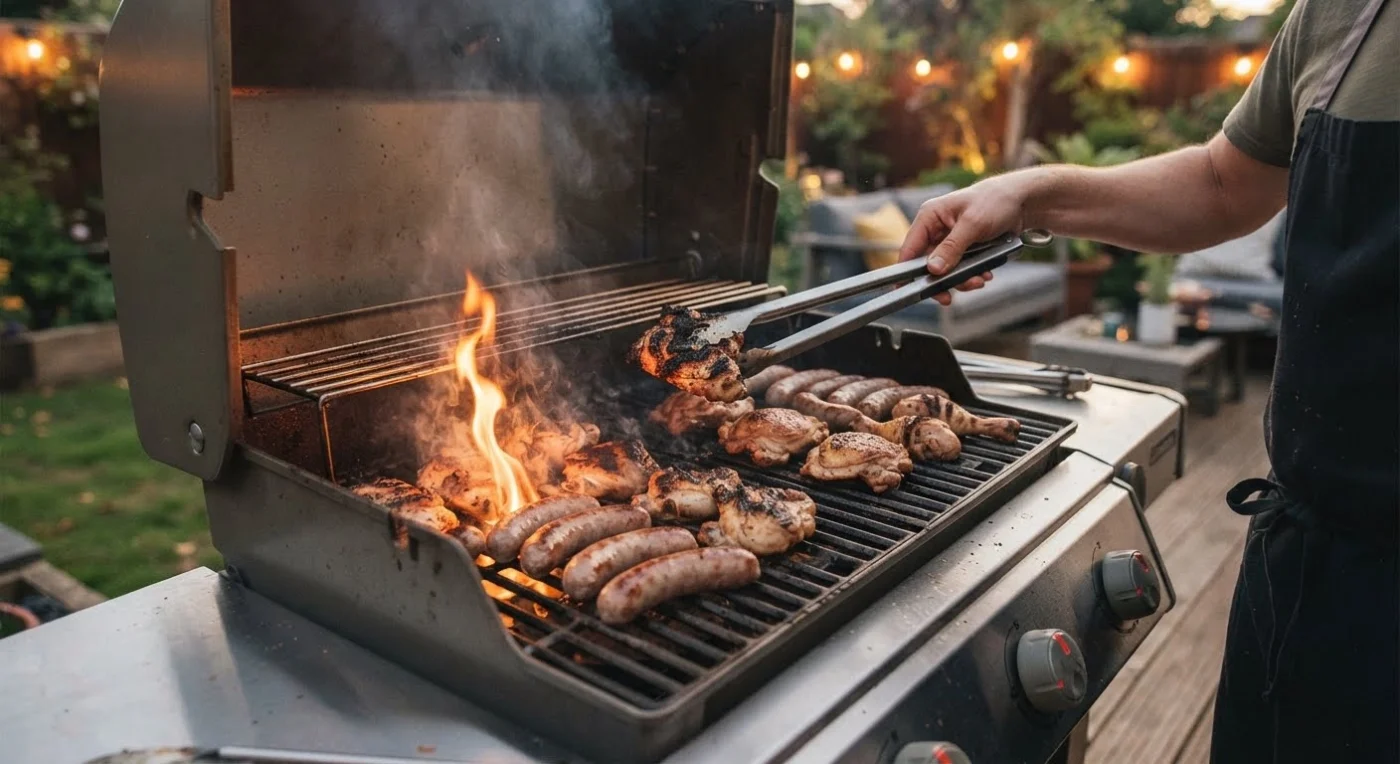
One minute your sausages are sizzling nicely; the next, flames are leaping up and the outsides are turning black. Flare-ups are part of cooking over fire, but they don’t have to be part of every cook. Once you know what causes them, it’s easy to stop flare-ups when grilling, and easy to tame the ones that still happen.
The short answer
Flare-ups happen when fat or oil drips onto the flames or the hot burners below. To stop them, trim excess fat, go easy on oil and oily marinades, set up a cooler zone on your BBQ, keep the grease tray clean and move food away from the flames when one starts.
What causes a flare-up?
As meat cooks, fat melts and drips. When it lands on hot burners, lava rocks or coals, it ignites and sends a burst of flame back up. A little is normal. Big, lasting flare-ups mean there’s too much fat or oil feeding the fire.
The usual suspects:
- Fatty cuts like sausages, chicken skin, lamb chops and pork belly
- Food dripping with oil or marinade
- A grease tray full of old fat
- Cooking everything over the hottest part of the BBQ
How to stop flare-ups when grilling
1. Trim the excess fat
Leave a thin layer for flavour, but trim thick, loose fat from steaks, chops and chicken. For more, see Should Rubs Be Applied Before or After Trimming Fat?
2. Go easy on oil
A thin coat is all you need. Let marinades drip off and pat the meat before it goes on. Dry rubs cause far fewer flare-ups than oily marinades, because there’s nothing to drip.
3. Set up two zones
This is the single best habit. On a gas BBQ, run one or two burners on high and leave the others low or off. On charcoal, bank the coals to one side. Sear over the hot side, then move food to the cooler side to finish. When a flare-up starts, you’ve always got somewhere safe to move things.
4. Clean the grease tray
On a gas BBQ, the grease tray and drip cup collect fat from every cook. Let it build up and it can catch fire. Empty and clean it regularly, and line it with foil to make it easier.
5. Cook fatty food over medium heat
Sausages, chicken thighs with skin and pork belly render a lot of fat. Medium heat lets that fat drip away gradually instead of all at once.
What to do when a flare-up happens
- Move the food. Shift it to the cooler zone or off the heat for a moment.
- Turn the burner down under the flare-up.
- Let it burn off. Once the dripped fat has burnt away, the flames settle and you can carry on.
- Close the lid briefly on a charcoal BBQ to starve the fire of air.
Don’t throw water on a gas BBQ. On charcoal, a light mist from a spray bottle can calm small flames, but it also stirs up ash onto the food.
Safety first
If fat in the grease tray catches fire and won’t settle, turn off the burners and the gas at the bottle, close the lid if it’s safe to do so and step back. Never use water on a grease fire. A fire blanket or extinguisher near the BBQ is a smart thing to have.
What about sugar and rubs?
Charring from sugar isn’t a flare-up. Rubs with sugar caramelise and can darken quickly over high heat, which looks similar. Most Outback Smoke & Fire rubs contain some sugar or honey, so cook over medium heat or finish on the cooler side. SPGZ and Herbalicious Rubdown have no added sugar and handle high heat. For more, see How to Stop BBQ From Burning.
Common mistakes
Cooking everything over full heat
No cool zone means nowhere to escape when the flames start.
Pricking sausages
It releases a rush of fat onto the flames and dries out the sausage. Cook them over medium heat instead.
Walking away
Fatty food needs watching. Stay close to the BBQ, tongs in hand.
Frequently asked questions
Are flare-ups bad for the food?
A quick lick of flame is harmless and can add flavour. Long flare-ups coat food in soot and burn the outside before the inside is cooked.
Why does my BBQ flare up when I open the lid?
On charcoal BBQs, opening the lid lets in a rush of oxygen, which makes the coals flare. Open it slowly and stand back.
Should I cook with the lid down?
For thicker cuts, yes. It cooks more evenly with less fat dripping onto the flames for each minute of cooking. For thin steaks and sausages, lid up is fine.
Do marinades cause more flare-ups than rubs?
Usually, yes. Oily marinades drip; dry rubs don’t. If you love a marinade, let the excess drip off before the meat goes on.
How often should I clean the grease tray?
Check it every few cooks and empty it before it gets full. Give it a proper clean at least every couple of months.
Final word
Trim the fat, go easy on oil, keep a cool zone and keep the grease tray clean. Do those four things and flare-ups become a rare blip instead of a regular battle. For more on cooking chicken without flames, see Crispy BBQ Chicken Thighs.
Hungry for ideas? Every Outback Smoke & Fire rub comes with its own free 10-recipe booklet. Grab yours here, or take the Rub Finder Quiz to find your rub.