
BBQ Basics
The Ultimate Guide to Resting Meat
Aug
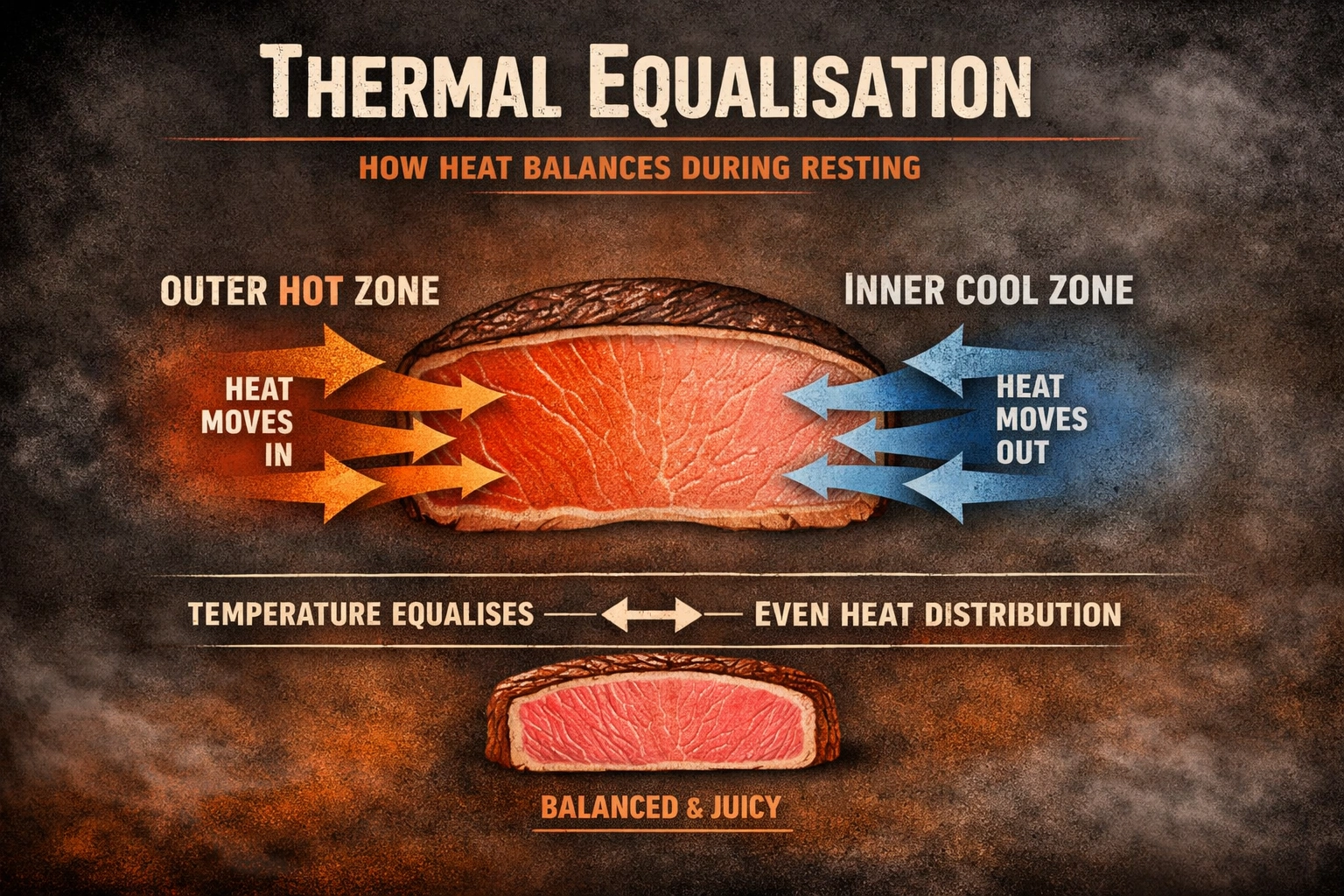
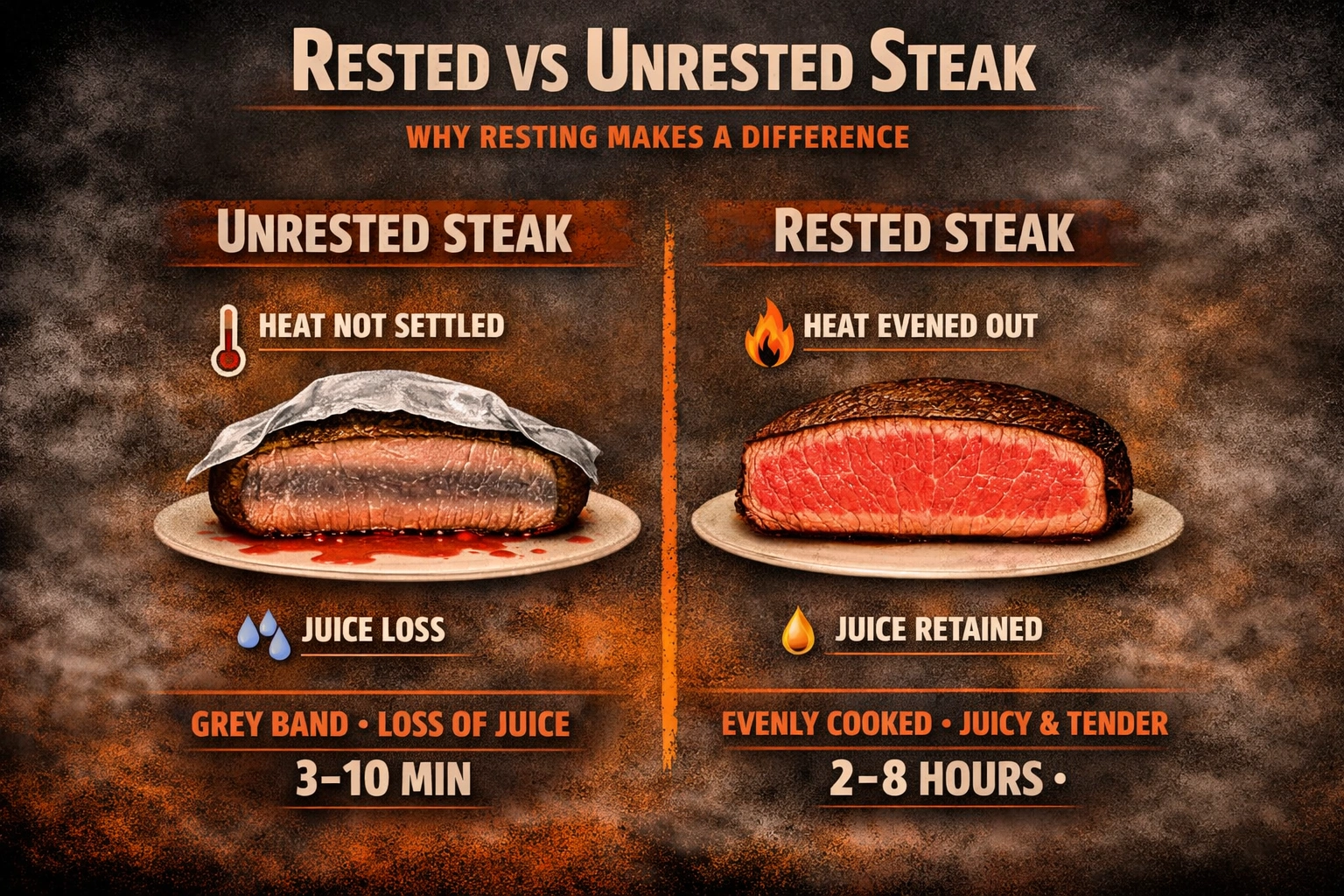
Resting meat lets heat and juices settle so your steak, roast or brisket finishes cooking evenly and stays tender. Most people think resting is about trapping juice, but the real reason is thermal equalisation.
🔥 Why Resting Meat Matters
When meat cooks, the outside gets hotter than the inside. Resting allows heat to move inward, temperature to stabilise and muscle fibres to relax. This gives you:
- more even doneness
- better texture
- better tenderness
- fewer dry patches
🔥 Carryover Cooking
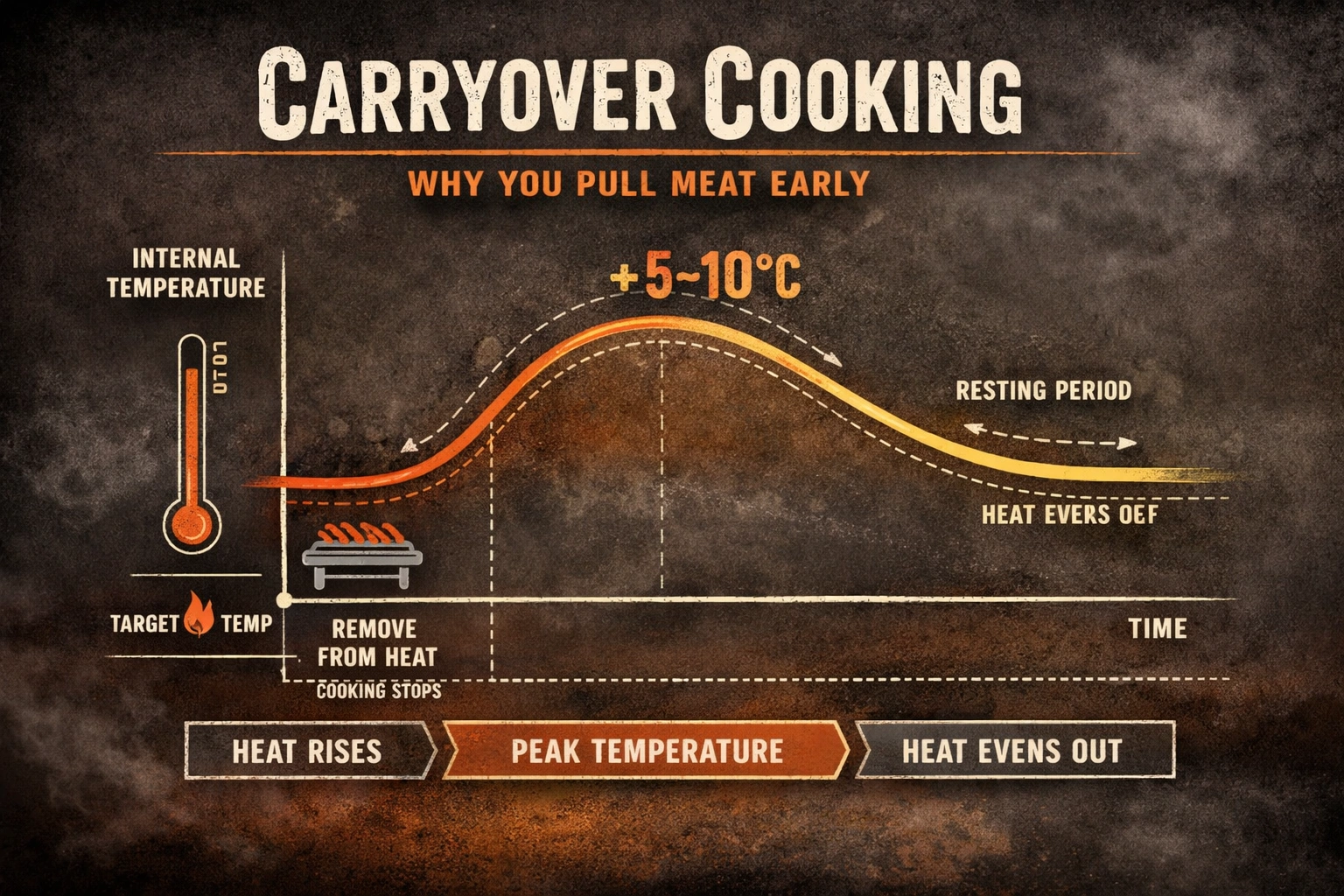
Carryover cooking is the rise in internal temperature after you remove meat from heat.
- Steaks: 2–5°C
- Roasts: 5–10°C
- Brisket or shoulders: 10–15°C
This is why you pull meat early.
🔥 Why People Think Resting Makes Meat Cold
Most resting problems come from technique, not the concept itself.
- thin steaks rested too long
- resting in a cold kitchen
- foil wrapped too tightly — tight foil traps steam against the meat, the surface gets wet, and wet surfaces lose heat faster. A loose foil tent keeps warmth in without making the meat sweat.
- cold plates
🔥 The OSF Resting Rules
1. Pull early
Remove meat from heat 3–5°C below your target doneness.
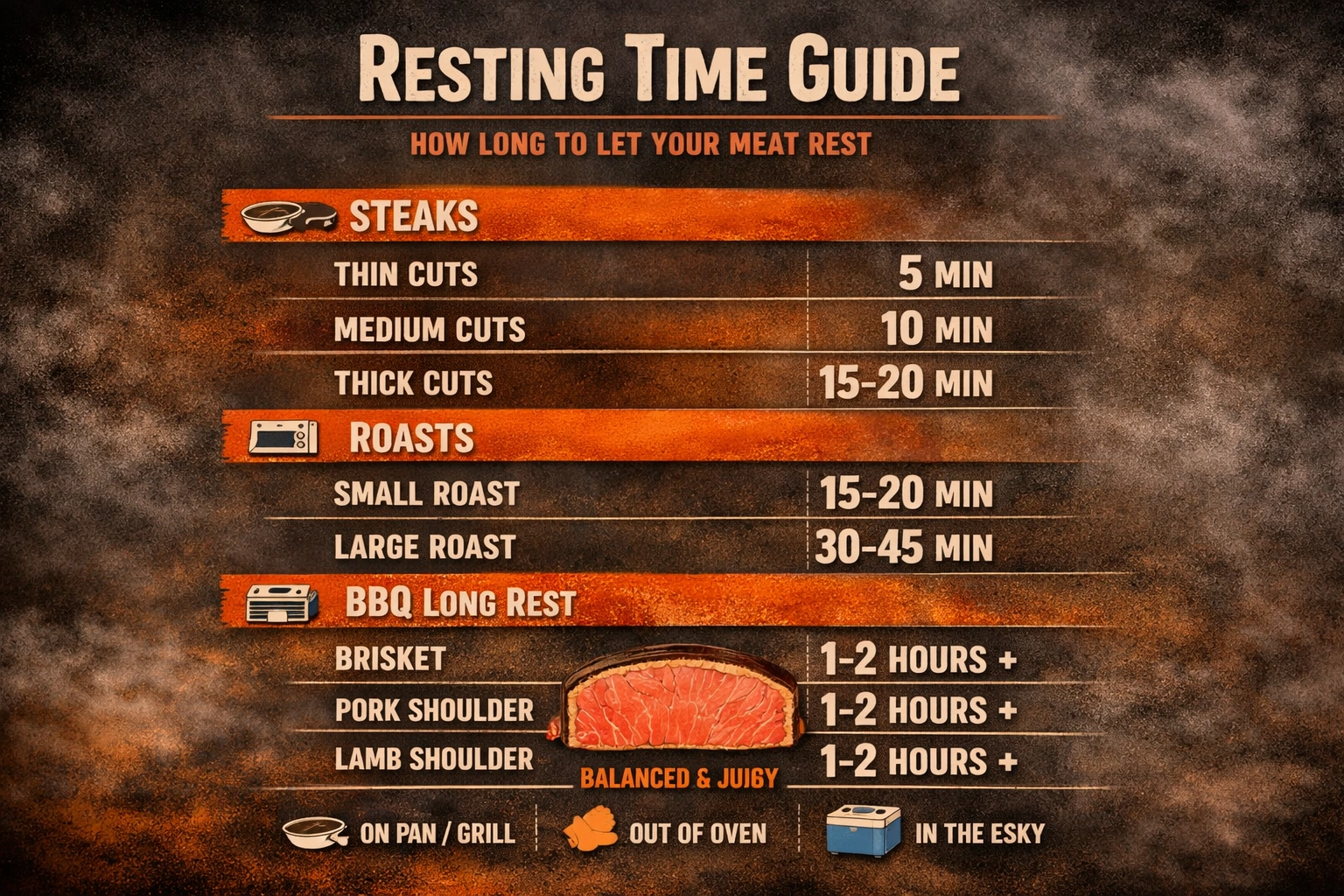
2. Rest according to thickness
Steaks
- Thin (2cm): 3–5 minutes
- Medium (3cm): 5–7 minutes
- Thick (4–5cm): 8–12 minutes
Roasts
- Small roast: 10–15 minutes
- Large roast: 20–30 minutes
BBQ (brisket, pork shoulder, lamb shoulder)
- Minimum: 2 hours
- Ideal: 4–8 hours
- Cooler method: wrap in foil + towel + esky
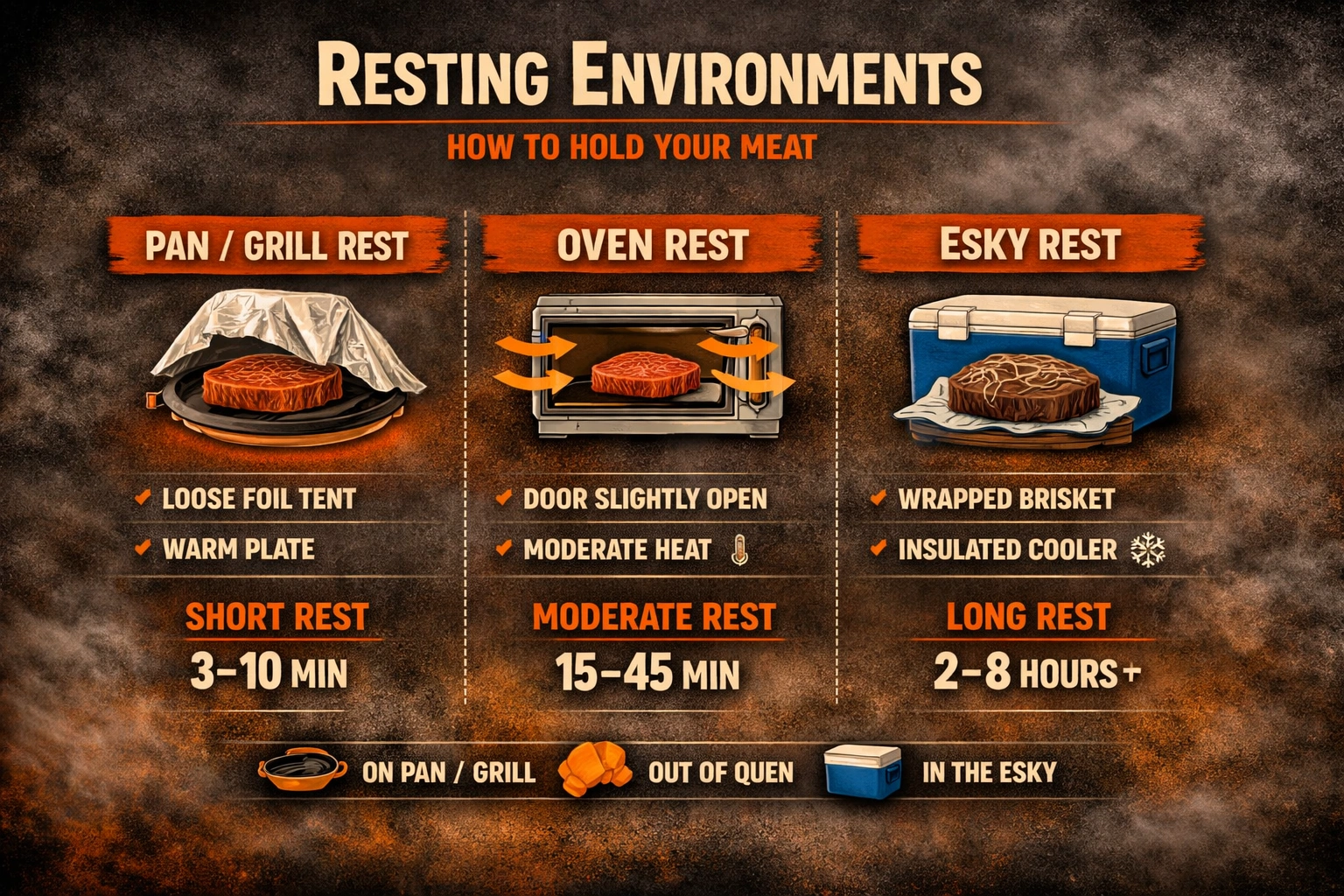
3. Rest in the right environment
- warm plate
- loose foil tent
- warm spot in the kitchen
- esky for BBQ
4. Slice at the right time
Slice too early and you lose heat and juice. Slice too late and the meat cools.
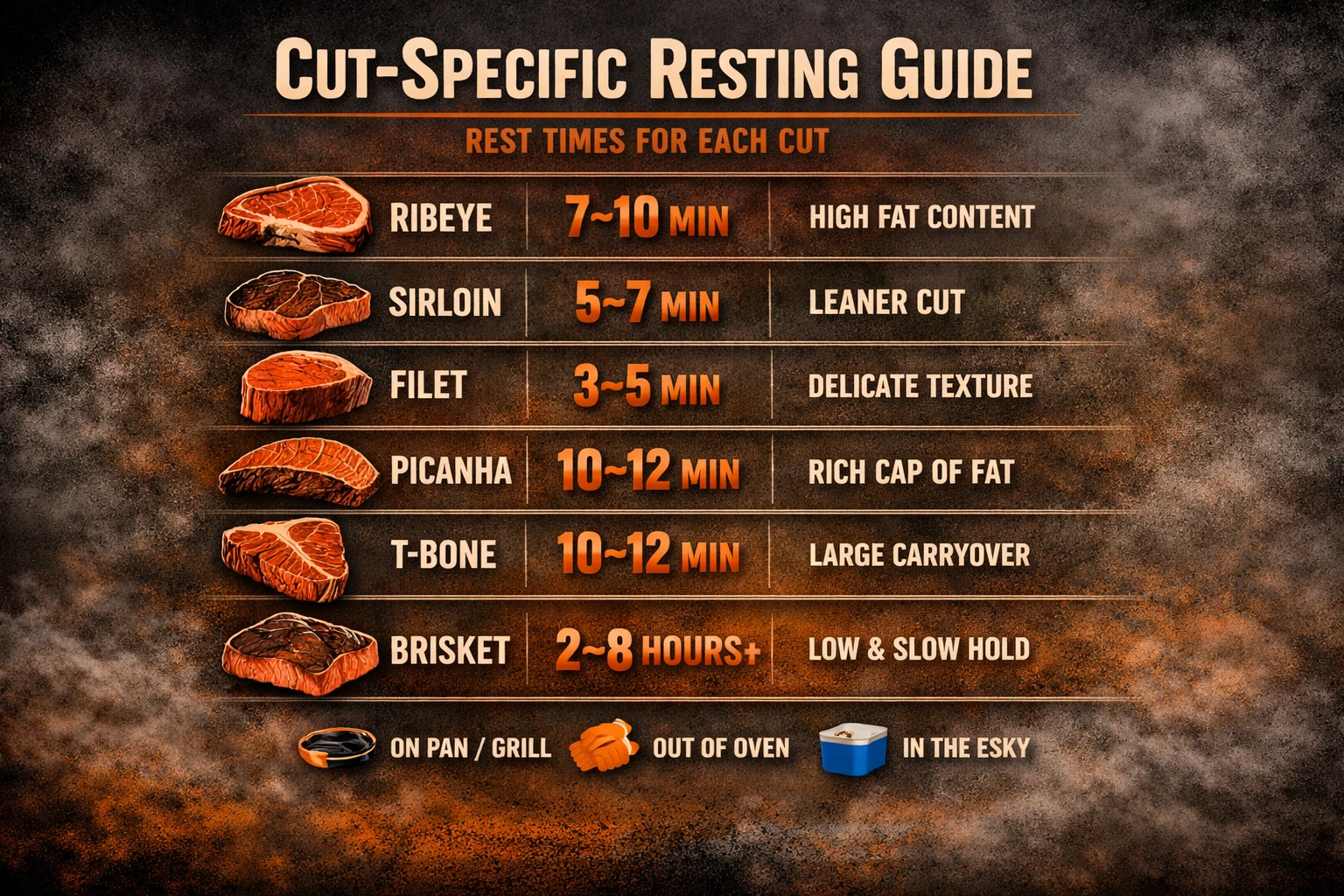
🔥 Resting by Cut
Ribeye
High fat = strong carryover. Rest 7–10 minutes.
Sirloin or Strip
Moderate fat. Rest 5–7 minutes.
Fillet
Low fat = cools fast. Rest 3–5 minutes.
Picanha
Fat cap = strong carryover. Rest 10–12 minutes.
T‑bone or Porterhouse
Two muscles = uneven heat. Rest 10–12 minutes.
Brisket
Rest 2–8 hours in an esky.
🔥 Myth‑Busting
Myth 1: “Resting keeps the juices inside.”
Not really. It’s about heat equalisation.
Myth 2: “Resting makes steak cold.”
Only if you rest too long or rest incorrectly.
Myth 3: “Reverse‑sear means no rest.”
Reverse‑sear needs less rest, not zero.
Myth 4: “Steakhouses don’t rest steaks.”
They do — but briefly using hot plates and workflow.
Myth 5: “You can just cook it longer instead of resting.”
Cooking longer ≠ resting. You’ll get uneven doneness.
Myth 6: “Resting is only for rare or medium‑rare.”
All doneness levels benefit.
🔥 Final Takeaway
Resting meat isn’t optional. It’s how you finish cooking properly. The right rest depends on the cut, thickness, cooking method and temperature. Follow the OSF rules and you’ll get juicier steaks, better roasts and BBQ that slices like butter.
🔥 Frequently Asked Questions
Do I really need to rest meat?
Yes. Resting lets heat equalise and juices settle so the meat finishes cooking evenly. It’s the final stage of the cook.
How long should I rest a steak?
It depends on thickness. Thin steaks need 3–5 minutes, medium steaks 5–7 minutes and thick steaks 8–12 minutes.
Does resting make my steak go cold?
Only if you rest too long or rest in a cold environment. A warm plate or loose foil tent keeps the temperature stable.
Should I rest meat in foil?
Yes — but loosely. Tight foil traps steam and softens the crust. A loose tent protects the meat without ruining texture.
Why do I pull meat early?
Carryover cooking raises internal temperature after you remove meat from heat. If you don’t pull early, you overshoot your target doneness.
Do different cuts need different resting times?
Yes. Fat content, thickness and muscle structure all change how heat moves, so each cut rests differently.
How long should I rest brisket?
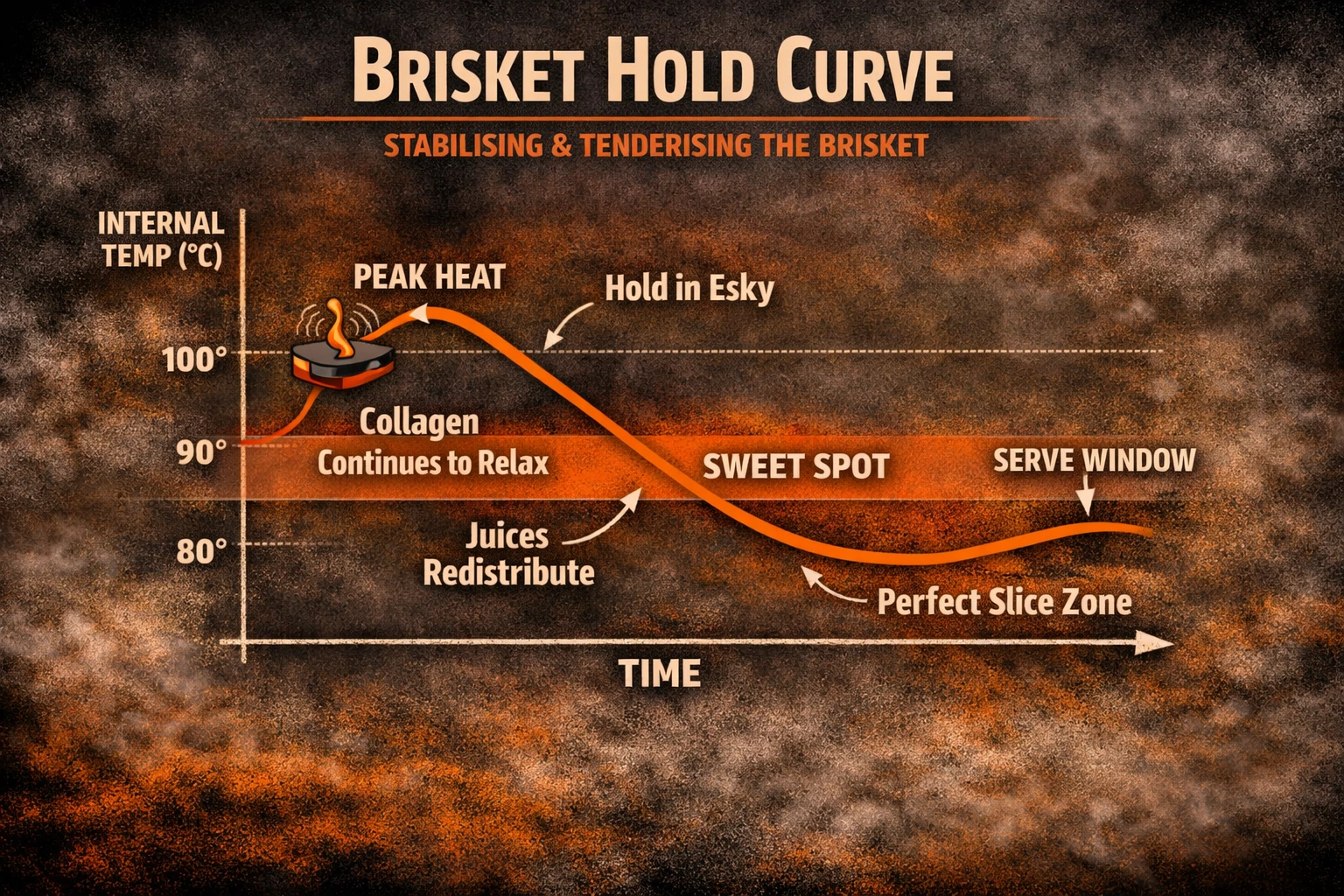
Brisket needs a long rest — 2 to 8 hours in an esky. This lets collagen relax and the meat become sliceable.
Does reverse‑sear mean I don’t need to rest?
Reverse‑sear reduces resting time, but doesn’t remove it. The meat still needs a short equalisation phase.
Should I rest meat before slicing or shredding?
Always before slicing. For pulled meats, rest until the temperature stabilises and the collagen has softened — you’ll know it’s ready when the meat bends easily, the fibres pull apart with gentle pressure and it breaks into strands rather than chunks.
What happens if I skip resting?
You’ll get uneven doneness, tougher texture and more juice loss. Resting is how you finish the cook properly.