BBQ Basics, Troubleshooting
Why Your Smoker Won’t Get Hot (And How to Fix It)
Jul
Your smoker isn’t running cold because you’re doing something wrong — it’s running cold because airflow, fuel behaviour, design limitations or electrical failures are stopping the system from working. Here’s the real breakdown.
Why Your Smoker Won’t Get Hot (And How to Fix It)
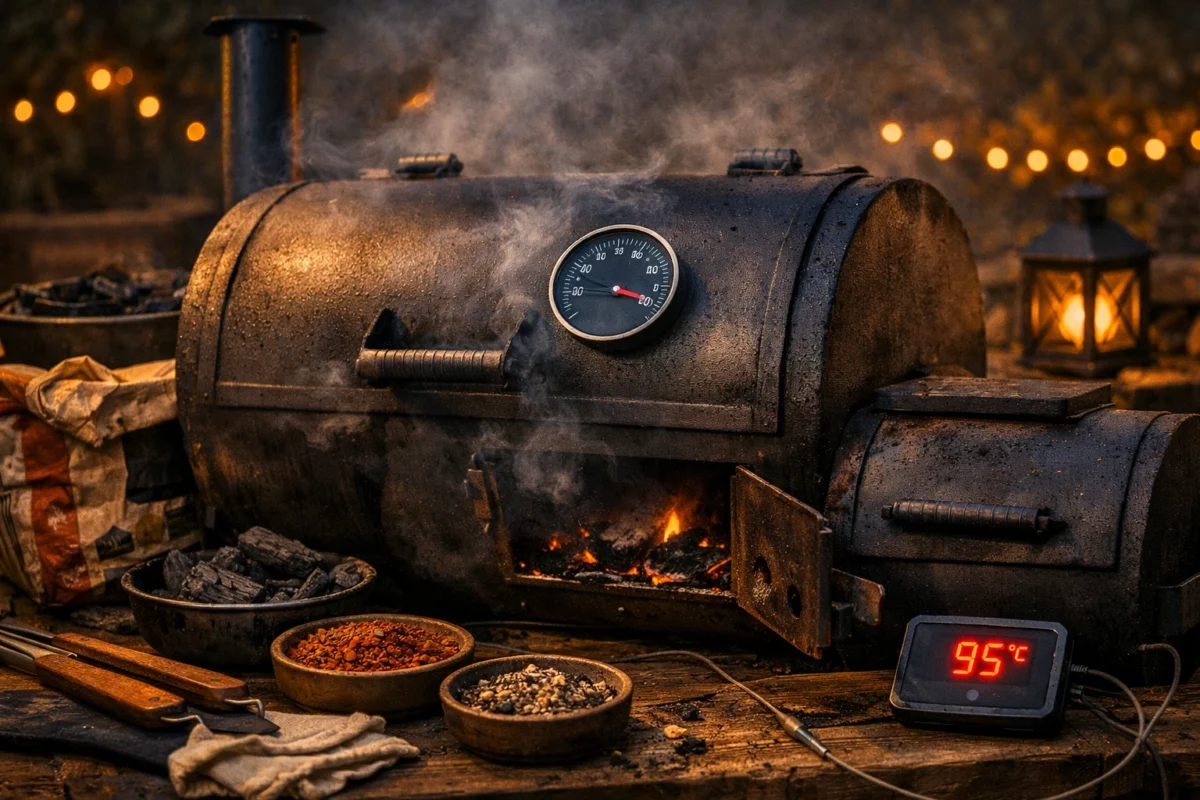
Every pitmaster eventually hits the same wall. One day your smoker runs like a dream. The next day it won’t climb past 180°C, or it stalls at 95°C, or it dies the moment you add meat.
You add more fuel.
You open vents.
You close vents.
You swear at it.
You blame the brand.
You blame the weather.
You blame yourself.
But smokers don’t run cold for random reasons. They fail for predictable, repeatable, fixable reasons — and once you understand the system, you control the outcome.
What This Article Covers
- Airflow failures
- Fuel & fire management issues
- Design limitations in cheap smokers
- Electric smoker failure modes
- User technique mistakes
- The fixes that always work
- The “what worked but nobody explains why” list
If you’re new to offsets, charcoal or pellet smokers, these guides will help you get even more out of this breakdown:
How to apply rubs properly and The science of bark formation.
This is the definitive breakdown of why smokers run cold — and how to fix it using real‑world data from thousands of cooks.
🔥 1. Airflow Failure (The #1 Reason Smokers Run Cold)
If air can’t move, heat can’t rise. It doesn’t matter what smoker you own — airflow is the engine that drives temperature.
- Crosswind collapse — wind hitting the stack kills draft.
- Wrong smoker orientation — turbulence disrupts airflow.
- Closing the stack — suffocates the fire instantly.
- Restricted firebox throat — common in cheap offsets.
- Chimney too short — weak draft, weak heat.
- Leaky smokers — thin metal + gaps = heat loss.
- Firebox door closed too early — starves the flame.
Airflow is everything. Fix airflow and the smoker wakes up.
🔥 2. Fuel & Fire Management Failures
Most “not enough heat” problems aren’t about fuel quantity — they’re about fuel behaviour.
- Ash choke — ash blocks oxygen from below.
- Coals sitting too low — no airflow under the fire.
- Wood chunks burning out fast — too small or too dry.
- Cold wood added to the fire — temperature crash.
- Wet pellets or wood — low BTU, weak heat.
- Too much wood at once — smothers the flame.
- Basket restrictions — cheap baskets block airflow.
Fuel needs oxygen, space and stability — not volume.
🔥 3. Design Limitations (The Truth About Cheap Smokers)
Some smokers are engineered in ways that make heat control difficult. This isn’t user error — it’s physics.
- Thin metal — loses heat rapidly.
- Firebox too small — common in Oklahoma Joes.
- Half‑moon throat openings — draft bottlenecks.
- Vertical smoker airflow issues — narrow paths.
- Traeger Tailgater vent holes — no natural draft.
- Weak pellet smoker fans — inconsistent combustion.
Once you know your smoker’s limitations, you stop fighting it.
🔥 4. Electric Smoker Failure Modes
Electric smokers fail more often than any other type — and the patterns are consistent.
- Burnt heating elements — the #1 failure.
- Burnt spade terminals — the silent killer.
- Controller failure — moisture + cheap circuitry.
- Blown fuses — often a symptom, not the cause.
- Chips not burning — tray too far from the element.
- GFCI tripping — shorting or water intrusion.
- Brand‑new failures — manufacturing inconsistency.
Electric smokers are simple to diagnose once you know the sequence.
🔥 5. User Technique Mistakes
These mistakes come from good intentions — but wrong assumptions.
- Wood on the chamber floor — blocks airflow.
- Closing the exhaust — kills draft.
- Too much charcoal — smothers the fire.
- Not pre‑heating long enough — unstable temps.
- Adding cold wood — temperature crash.
- Chasing temperature — creates instability.
- Opening the lid too often — heat loss.
Technique matters — but only once airflow and fuel are correct.
Shop rubs engineered for bark, balance and flavour →
🔥 6. The Fixes That Always Work
- Rotate the smoker to avoid crosswind collapse.
- Open the stack 100% — always.
- Clear ash every 30–60 minutes.
- Raise the charcoal grate for better airflow.
- Pre‑warm wood before adding it.
- Burn on the firebox floor (cheap offset hack).
- Add thermal mass (firebricks).
- Seal leaks in cheap offsets.
- Replace burnt terminals (electric smokers).
- Replace heating elements when needed.
- Cover Tailgater vent holes + add a chimney.
- Increase chimney height for stronger draft.
- Pre‑heat longer for stable combustion.
🔥 7. The “What Worked But Nobody Explains Why” List
- Rotating the smoker fixes crosswind collapse.
- Opening the stack restores draft.
- Clearing ash restores oxygen flow.
- Raising the grate increases combustion.
- Pre‑warming wood prevents temperature drops.
- Burning on the floor improves airflow.
- Adding a chimney creates natural draft.
- Cracking the firebox door boosts oxygen.
- Using fewer coals prevents smothering.
- Keeping the flame alive ensures clean smoke.
- Adding bricks stabilises heat.
- Replacing terminals revives electric smokers.
- Replacing elements restores full heat.
- Covering random vents improves pellet smoker draft.
- Stopping temperature‑chasing stabilises the fire.
🔥 Conclusion: You’re Not Crazy — Your Smoker Is Just a System
Your smoker isn’t unpredictable. It isn’t moody. It isn’t random. It’s a simple system built on airflow, fuel behaviour, thermal mass and combustion stability.
Once you understand the system, you stop fighting the smoker — and start controlling it.
That’s the OSF difference. We don’t give you tips. We give you understanding.
Explore the rubs built on real BBQ science →
🔥 Frequently Asked Questions
Why won’t my smoker get hot?
Airflow failure is the most common cause — wind, blocked draft, ash choke or restricted vents.
Why does my smoker drop temperature when I add wood?
Cold wood absorbs heat before it ignites. Pre‑warm wood on the firebox first.
Why does my electric smoker stop heating?
Burnt terminals or a failed heating element are the most common causes.
Why does my offset struggle in the wind?
Crosswinds collapse draft. Rotate the smoker so wind hits the firebox, not the stack.